

Now is Not the Time to Panic for Canada, That Comes Later: Part Two
Canada hasn’t won a game against the United States since February 8, 2025. What lessons can the coaches take away from this brutal streak of losses?
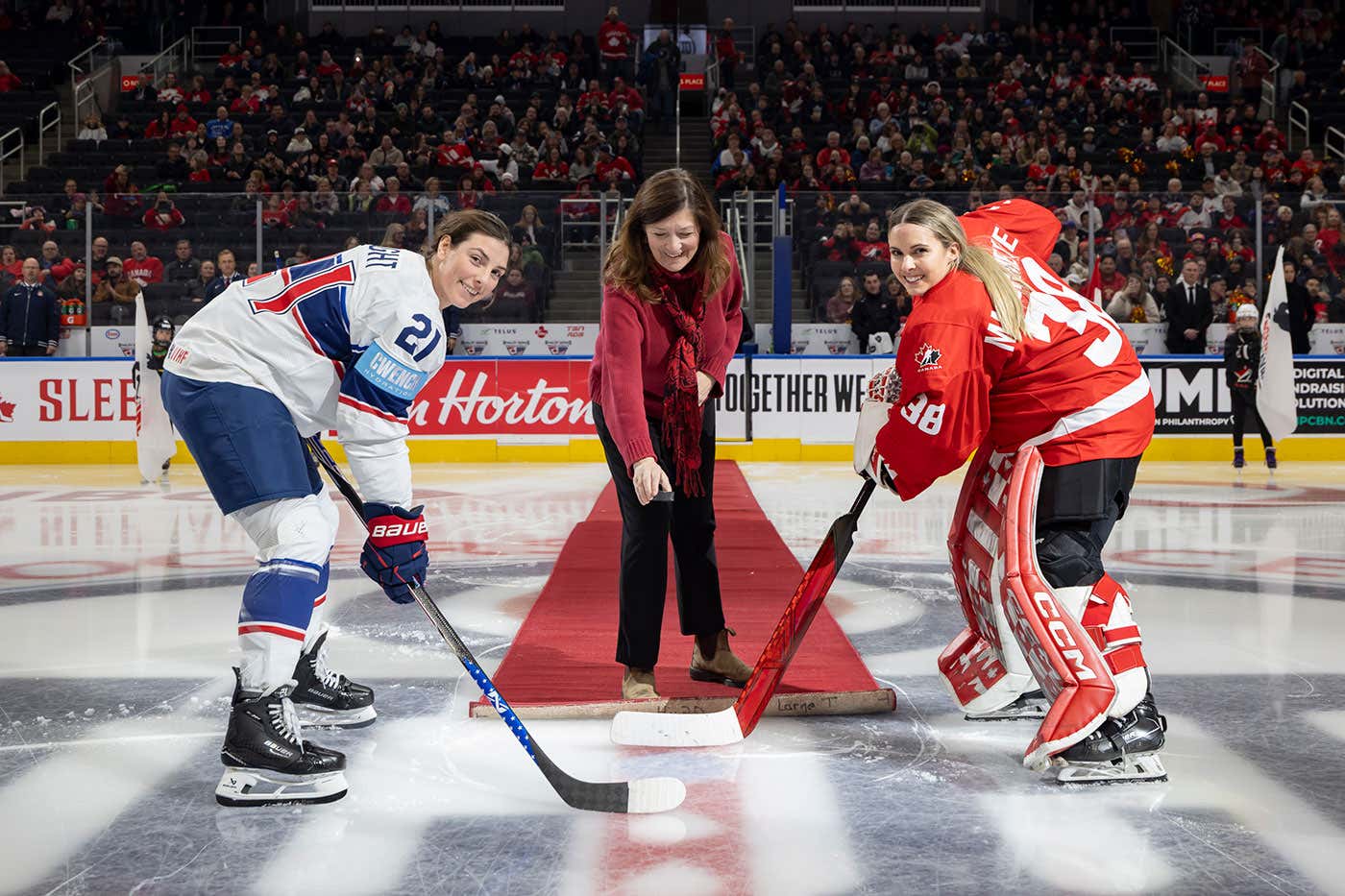
Canada hasn’t won a game against the United States since February 8, 2025. They've lost both games against the U.S. at the 2025 Women’s Worlds in Czechia and all four games of the most recent Rivalry Series. In Part One of this article, I talked about what's going wrong with the players and what lessons the team can take away from their losing streak. But what can the coaches do differently?
The players absolutely need to take responsibility for these horrid performances. Eventually you have to show some pride and do something. The players looking terrible doesn’t absolve the coaching staff at all in how poorly the team played either. It’s the coaches' job to have the team ready to play these games, and did they ever not look ready to play these games. In terms of a coaching staff evaluation, it's hard not to declare it a fail across the board.
As the head coach, Troy Ryan is naturally—and rightfully—going to take a lot of heat for these loses. You’re the head coach; you get credit for the wins and take the blame for the losses. It's part of the job. But I don’t think anyone on his coaching staff should be getting out of this without a mention of how terrible they did either. While Troy Ryan is the head coach, that doesn’t mean he’s doing everything for this team. Or at least, you hope he isn’t. No one is perfect, and a head coach should be surrounded by assistant coaches who shore up his weaknesses.
On the face of it, it looks as though Troy Ryan has surrounded himself with a good group of coaches. Kori Cheverie has proven herself to be one of the better coaches in the world. She has the Montréal Victoire playing terrifyingly good defensive hockey, resulting in two top-two finishes in the PWHL. Britni Smith was on the staff for the 2025 IIHF World Championship, was a long-time coach at Clarkson University as they made it to two NCAA National Championships, and now is the head coach at Syracuse University. Then there’s Caroline Ouellette, who has been in the Team Canada program for a long time as both a player and coach in various roles. She’s also one half of the duo with her wife, Julie Chu, building Concordia University into a consistent USports powerhouse.
And the Canadian coaching staff with Troy Ryan at the helm hasn't even seen a lot of turnover in the assistants. Cheverie has been with the coaching staff since the 2022 Olympics, Ouellette has been with Tory Ryan since the 2022 Worlds, and Smith is the newest addition, having joined the coaching staff for the 2025 Worlds. The other assistant coaches have been Doug Derraugh, who was on Troy Ryan’s staff from the 2021 Worlds to 2023 Worlds; Ali Domenico, who was on staff for the 2022 Worlds and Olympics; and Courtney Kessel and Vicky Sunohara, who each saw one stint behind the bench as assistant coaches. We’ve seen relatively the same staff year after year, and it’s been the most successful run for Team Canada since the 1990s to 2010.
Yet here we are, looking at Team Canada's major failure against the U.S. since February 2025. That failure's definitely on the shoulders of the coaching staff. Maybe not 100%, but six straight losses isn’t the best look on your coaching ability, especially with how these last four games have gone. I’ve not been lacking in my criticism of this coaching staff, especially Troy Ryan. I’ve mentioned how post-2023, there’s been a noticeable change in philosophy, particularly when it comes to the offensive side of the game. While I disliked the direction the team took play-wise, the results still looked fine till now.
I don’t think these are bad coaches. Flawed? Definitely. But what coach isn’t? Right now, those flaws have been exposed more than before. Just like the players, the coaching staff needs to do a deep introspective on their coaching philosophies and particularly their tactics. They had four games where they could experiment with what they wanted to do on the ice and where the flaws in their systems and tactics might be. And did the USA ever give them a lesson in where those flaws are.
Abbey Murphy has a HAT TRICK 🎩#RivalrySeries pic.twitter.com/LgsJFSIIRb
— TSN (@TSN_Sports) November 7, 2025
The penalty kill needs work for sure. It went 11/17, for a 65% penalty kill. The good news is that the penalty kill was 4/4 in Game Four of the Rivalry Series. But in games they needed to win before losing the series completely, the Canadian penalty kill operated at 54%. That’s "losing in the quarterfinal" levels of terrible penalty kill. The defensive play in general, from the forwards to the blueliners, clearly needs an overhaul. Six goals against per game is just unacceptable. You can’t call yourselves pro hockey players when you’re getting smoked like that.
Even in Game Four, when Canada only allowed one goal on a direct shot (the other three were deflections plus an empty netter), the defensive play wasn’t too encouraging. The US was eating them alive on low to high plays, and Canada was just packing the slot hoping for a block or deflection wide of the net. This also eliminated Canada’s ability to counterattack. If all you’re doing is defending for a minute once you get the puck, you’re looking for a line change, not an offensive opportunity that would lead to another shift in the defensive zone.
If you’re of a certain vintage, you’ve probably seen the movie National Treasure. I’m not suggesting stealing historical objects during a crazy treasure hunt, although it does sound like fun. What I’m remembering from that movie, apart from the fun treasure hunt, is when Ben Gates, played by Nicholas Cage, talks about how, in the course of Thomas Edison inventing the lightbulb, he found over a hundred ways of how not to create a lightbulb.
Specifically in these four games, the Canadian coaching staff has learned what doesn’t work. Just like their players, the U.S. coaching staff open-hand slapped the Canadian coaching staff. They got handed back the test results on the roster and its supporting tactics, and it’s an F-. It’s definitely possible that the players just didn’t execute whatever the coaching staff wanted them to do. It’s on the coaches, though, to get the players ready, and get them rowing in the same direction. Whatever the coaches wanted to happen didn’t, and only the coaches know why. Only the coaches know why it didn’t work and that’s great.
It’s great that they know what didn’t work because it means that instead of finding out at the Olympics that they need to adjust on the fly, they have time to figure out how to fix the issues. If you’re going to lose and lose bad, now is the time to do it. Whether it’s a last-minute roster change or modifying a system, you now have a month to make that happen. Sure, there’s no Centralization to continually work at this, but it's not as though most systems are something unique and hard for players to understand. These are very smart players who can adapt. They adapt from their PWHL teams to the national team. The U.S. players have to do the same thing. The U.S. coaches have to do the same thing.
If the Canadian coaching staff is worth their spots on the bench, they can figure this out. Kevin Dineen figured out how to do it. He was named head coach of Team Canada on December 17, 2023. You’ll notice that’s about the same time as from now to the Olympics, and Dineen didn’t have years of already coaching nearly the same kind of roster. If Troy Ryan and his staff need to make adjustments, there’s no excuses not to. Once again, it's hard to tell if it’s more a player than coaching problem, but the coaches do know what the problem is and we’ll know if they fixed it come February.
Team Canada’s roster is being announced on January 15, 2026. That probably means any player looking to make the team has a few weeks to make one final big-time impression to go from bubble player to making the team. This also means that the coaching staff has to decide within a few weeks how much of the roster from this series they want to bring to the Olympics. Look, they’re going to bring the majority of them, and that’s probably the right decision. I think there’s some key decisions in how Canada builds their roster that’ll help the coaching staff reach their goals, and specifically, the goal of winning a gold medal.
The U.S. put on a forechecking clinic and look like they’re going to get on the blueliners retrieving the puck fast. With where the sport as a whole is going you need puck movers to get passed those forecheckers fast. This team needs Claire Thompson, Sophie Jaques, and Chloe Primerano. They’re the most equipped to get the puck out of the zone. That’s three of seven blueliners. Renata Fast, Ella Shelton, and Erin Ambrose are also making the team. They have the experience and skill for at least one last good Olympics.
Now, for the last spot, it needs to be a penalty killer, someone more equipped defensively, someone who can defend the net front. This is where the coaching staff should wait until the last possible second to make this selection. This should be a battle between Jocelyne Larocque, Micah Zandee-Hart, Kati Tabin, and Ashton Bell. Larocque will probably have the inside track due to her experience, though it’s not as if Bell or Zandee-Hart don’t have any experience themselves. The goalies are simple: you bring Ann-Renée Desbiens and whoever the hottest two goalies are headed into early January. Maschmeyer has the inside track, but obviously, we have to pay close attention to Kayle Osborne and Ève Gascon.
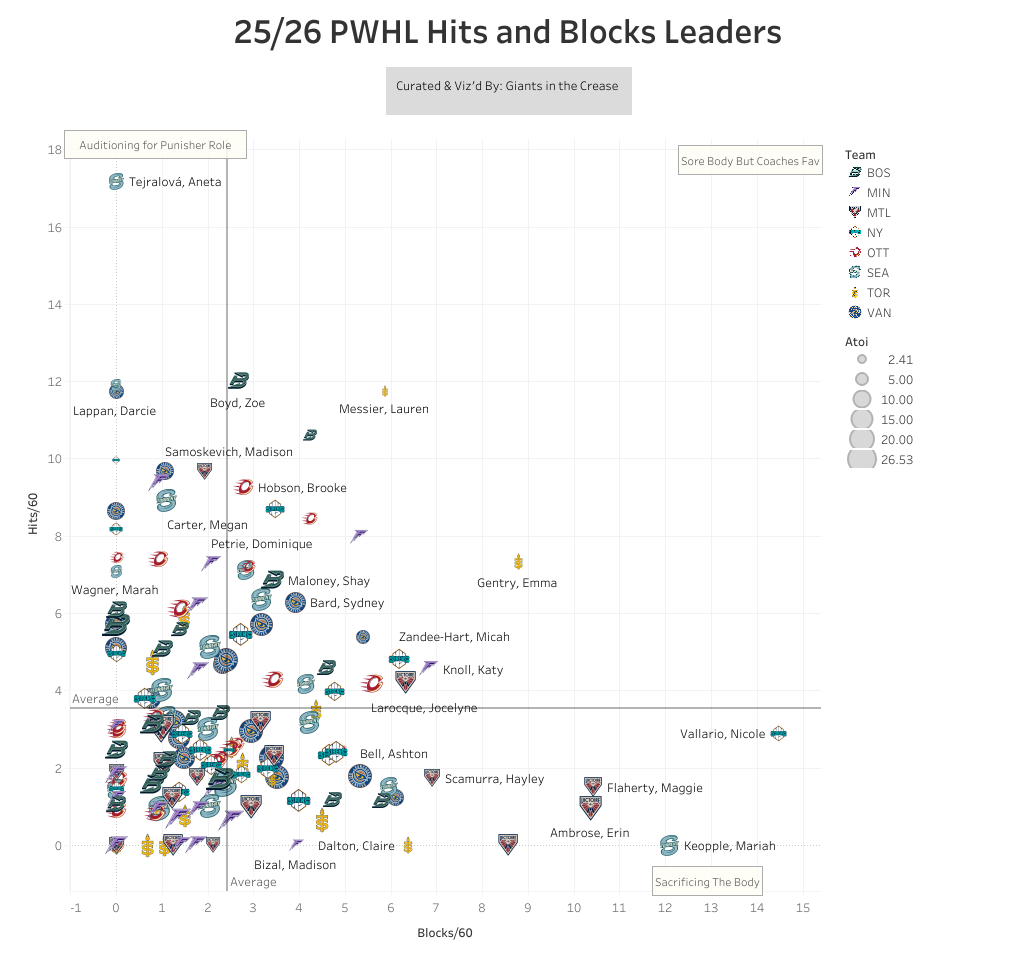
Now for the forwards, for which there are 13 spots available. In the top six, the easy picks are Sarah Fillier, Daryl Watts, Marie-Philip Poulin, and Laura Stacey. If she’s healthy, you add in Sarah Nurse, and I think Natalie Spooner should be in there too. Spooner looks like she’s fully recovered and has looked good so far to start the season in Toronto. The other spots I believe to be rightfully locked up are Blayre Turnbull, Kristen O’Neill, and Emily Clark, who'll serve as the north-south fast players who don’t care about their own safety.
This leaves us with four or five spots available. Turnbull, O’Neill, and Clark are interchangeable in the bottom six, depending on how you want to deploy them. Ideally, you have some scoring depth in your bottom six, making your top three lines at least somewhat dangerous while giving yourself the option to move players up the line-up. One of those players that fits that description is Caitlin Kraemer. She is very skilled, has a great shot, is already carrying the offensive load for the University of Minnesota-Duluth, and can play a bottom six type game. You can put Kraemer anywhere in the line-up, and skill-wise, at least she’ll never look out of place.
Put the pitchforks away: Emma Maltais and Brianne Jenner are on the roster as well. They fit into the need for players who can play anywhere in the top nine of a forward line-up. Both can be centers or wingers, and they definitely bring some grit to the line-up. That’s one or two spots left (based on Sarah Nurse’s health) between at least Hannah Miller, Jennifer Gardiner, Danielle Serdachny, and Julia Gosling. If you’re looking for other players who can challenge for those spots, I personally believe Anne Cherkowski and Jocelyn Amos are more than viable options as well. Once again, the coaching staff should take their time in seeing who wants those spots, based on their performance for the next few weeks. Who looks like they’re getting ready for the Olympics?
Would everyone rather Team Canada be looking like a well-oiled machine heading into the Olympics? Of course. Team USA fans, their coaching staff, and players are most likely feeling as though they are unstoppable. They easily could be, based on these performances. Canada, though, is far from cooked ,as the kids say these days. This Rivalry Series was awful for the team, but sometimes you need to lose the battle to win a war. Canada was served valuable lessons in these games courtesy of the U.S., and if Canada listens to them, no one will remember how bad these games were, just like no one remembers how Canada lost eight straight games to the U.S. but won 2002 Olympic gold.
My Ideal Roster
Forwards
|
Daryl Watts |
Marie-Philip Poulin |
Laura Stacey |
|
Sarah Fillier |
Sarah Nurse |
Natalie Spooner |
|
Emily Clark |
Hannah Miller |
Emma Maltais |
|
Caitlin Kraemer |
Blayre Turnbull |
Brianne Jenner |
|
Kristen O’Neill |
|
|
Defenders
|
Ella Shelton |
Renata Fast |
|
Micah Zandee-Hart |
Sophie Jaques |
|
Chloe Primerano |
Erin Ambrose |
|
Claire Thompson |
|
Goaltenders
|
Ann-Renée Desbiens |
|
Emerance Maschmeyer |
|
Ève Gascon |
Comments ()