

Designing PWHL "Reverse Retro" Jerseys, Part 1: The Canadians
The PWHL needs third jerseys, so LJ came up with some designs inspired by local women's hockey history.

If there are two niche things in women’s hockey that I love, it’s jersey design and history. The Ice Garden has been kind enough to let me talk about both extensively (see my jersey reviews and my women’s hockey history podcast, Purple Posts). But what if I were to put these two passions together?
That’s exactly why I’ve started a new project that I’m thrilled to share with you all: designing “reverse retro” third jerseys for all eight PWHL teams. I think the PWHL could use some third jerseys, so why not borrow a page from other leagues and mix new and old? As such, I dug into each PWHL team’s local women’s hockey history to inspire the designs and pay tribute to all those who came before. For each jersey, I’ll walk you through my design process, as well as all the references to the teams and jerseys of women’s hockey past. First, we’re starting with the PWHL’s four Canadian franchises.
Toronto Sceptres
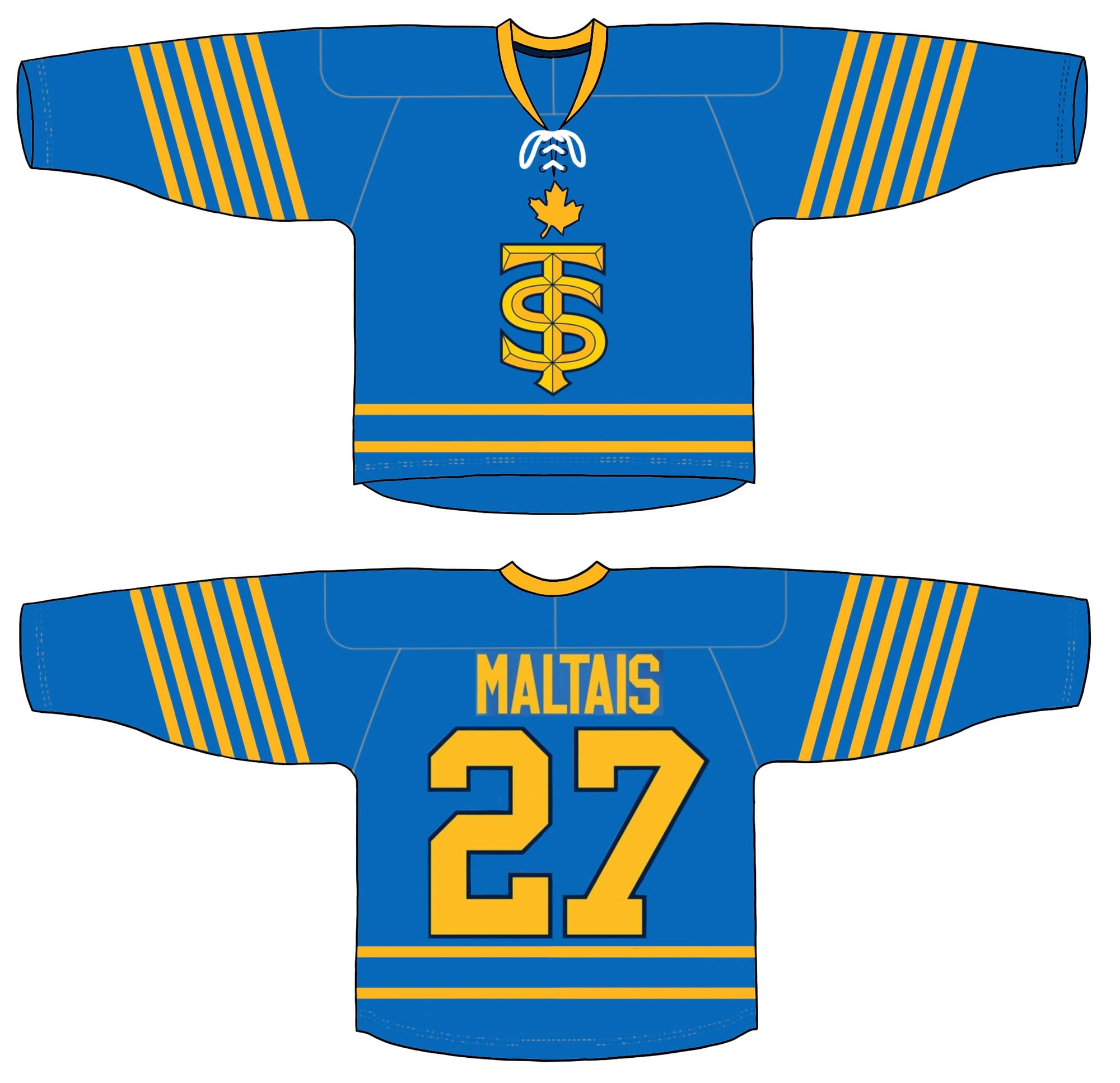
The Design
This Sceptres’ jersey pays homage to the last two pro women’s hockey teams to call Toronto home prior to the PWHL. The design features six diagonal yellow stripes on the sleeves, which are borrowed from the PHF’s Toronto Six and their white jerseys. The allusion to the CWHL’s Toronto Furies is a little more subtle. The two stripes along the waist are very Toronto, a shared element linking this design to the Furies and the NHL’s Maple Leafs. Speaking of leaves, I’ve replaced the arrow-bauble thing in the Sceptres’ logo with a jaunty little maple leaf, in reference to the Furies logo as well as Toronto’s city flag, which said logo adapted. All the yellow accents sit on a crisp, Sceptres blue base, keeping the design bold yet simple with only two main colors.
The History
The legacy of the Toronto Furies can still be seen in the current PWHL. Founded in 2010, the Furies entered the CWHL as part of that league’s reorganization, combining several Toronto-area teams into the new Toronto CWHL, which earned the official name Furies in 2011 after a fan vote. They won the Clarkson Cup in 2014 with a nail-biting overtime win over the Boston Blades, and continued to be a top team for the next few years until the CWHL folded in May 2019.
A lot of names associated with the Furies might sound familiar: Jennifer Botterill, Sami Jo Small, Tessa Bonhomme, Rebecca Johnston, Megan Bozek, Natalie Spooner, Renata Fast, Michela Cava, Elaine Chuli, Shiann Darkangelo, and Sarah Nurse (plus Jessica Platt, the first transgender woman in pro women’s hockey!). Courtney Kessel, former Boston Fleet coach, had her first pro head coaching gig with the Toronto Furies. And Montréal Victoire head coach Kori Cheverie set the Furies’ franchise records in points, games played, and power play goals, as well as setting the CWHL’s “ironwoman” streak for most consecutive games played.
The Toronto Six appeared on the scene not too long after the CWHL met its untimely demise, with the league then known as the NWHL introducing its first Canadian expansion team in April 2020. The Six got off to a rocky start, with their first season in the ill-fated NWHL Lake Placid “bubble,” but quickly established themselves as a force to be reckoned with during the next two PHF seasons. They won the final Isobel Cup in 2023 before the PHF’s assets were bought out by the ownership group of what we now know as the PWHL.
Still, the Six’s influence lives on through the PWHL players who donned their unique logo. In the inaugural PWHL draft, ten former Toronto Six players were selected, the most of any PHF team, including Daryl Watts, Tereza Vanišová, Shiann Darkangelo, Elaine Chuli, Michela Cava, Dominika Lásková, Kati Tabin, and Emma Woods. Even fan-favorite goaltender CJ Jackson was part of the Six’s Isobel Cup-winning team.
Ottawa Charge
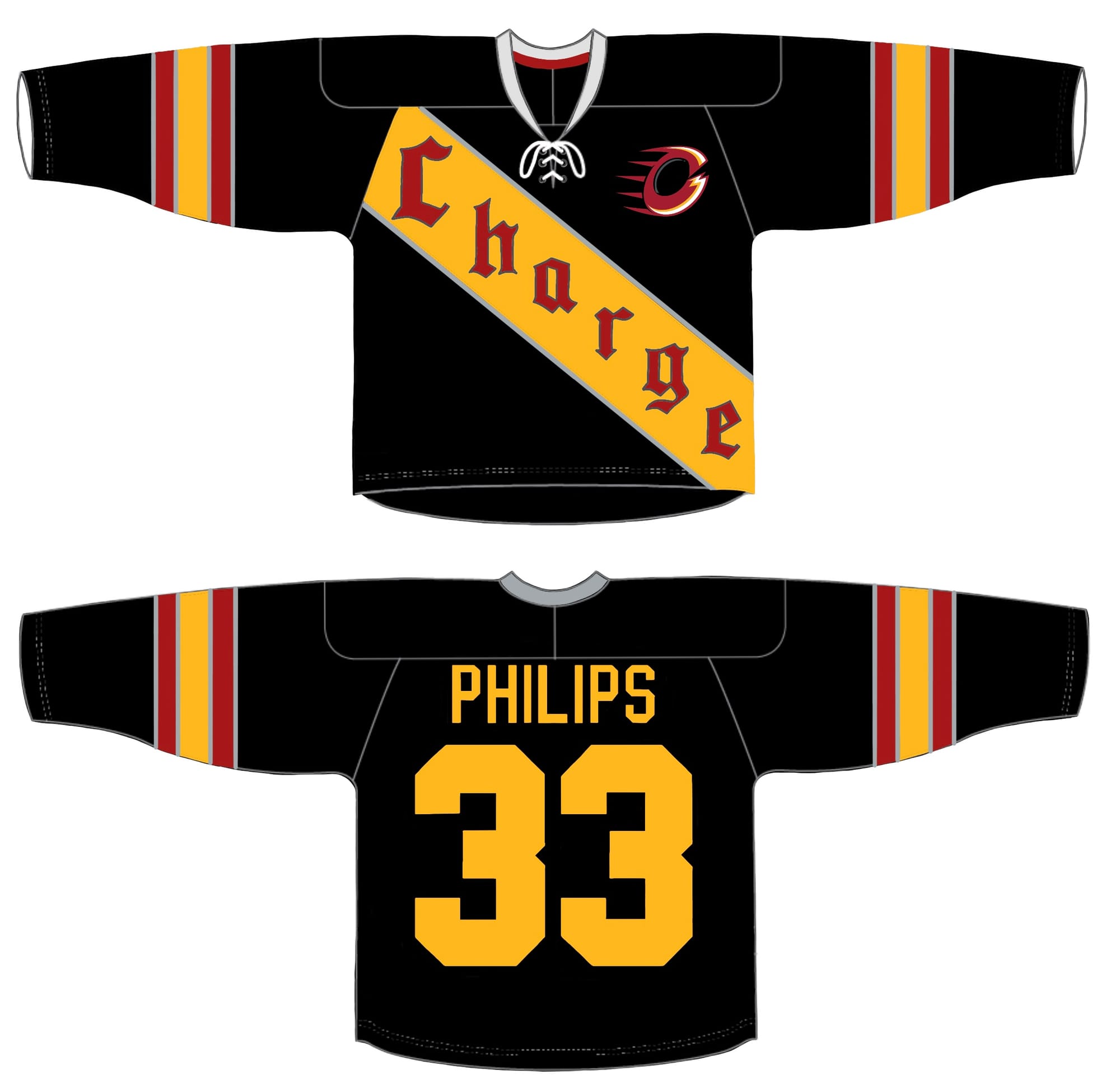
The Design
This Ottawa Charge jersey brings old-timey hockey design into the modern era. The look is inspired by the black and yellow sweaters of the Ottawa Alerts, an early 20th-century women’s hockey dynasty based out of Canada’s capital region. Since the Charge already have yellow in their color scheme, it was only natural to make it the focal point of this homage, featuring a large chest stripe and the team name in a curly, Gothic font. The sleeve striping is ahistorical, as the Alerts’ simple sweaters had no other ornamentation, but I thought the three-band pattern kept the classic vibe while adding some red accents to break up the design. And while it may look a little strange, the Charge logo on the upper chest is purposeful, standing in for the sewn-on crest featured on the original Alerts uniforms.
The History
The Ottawa Alerts are a fascinating example of just how far back the history of women playing hockey goes. There’s so much to their story that Ottawa beat writer Elisha and I once spent 30 minutes diving into it.
 LJ Bachenheimer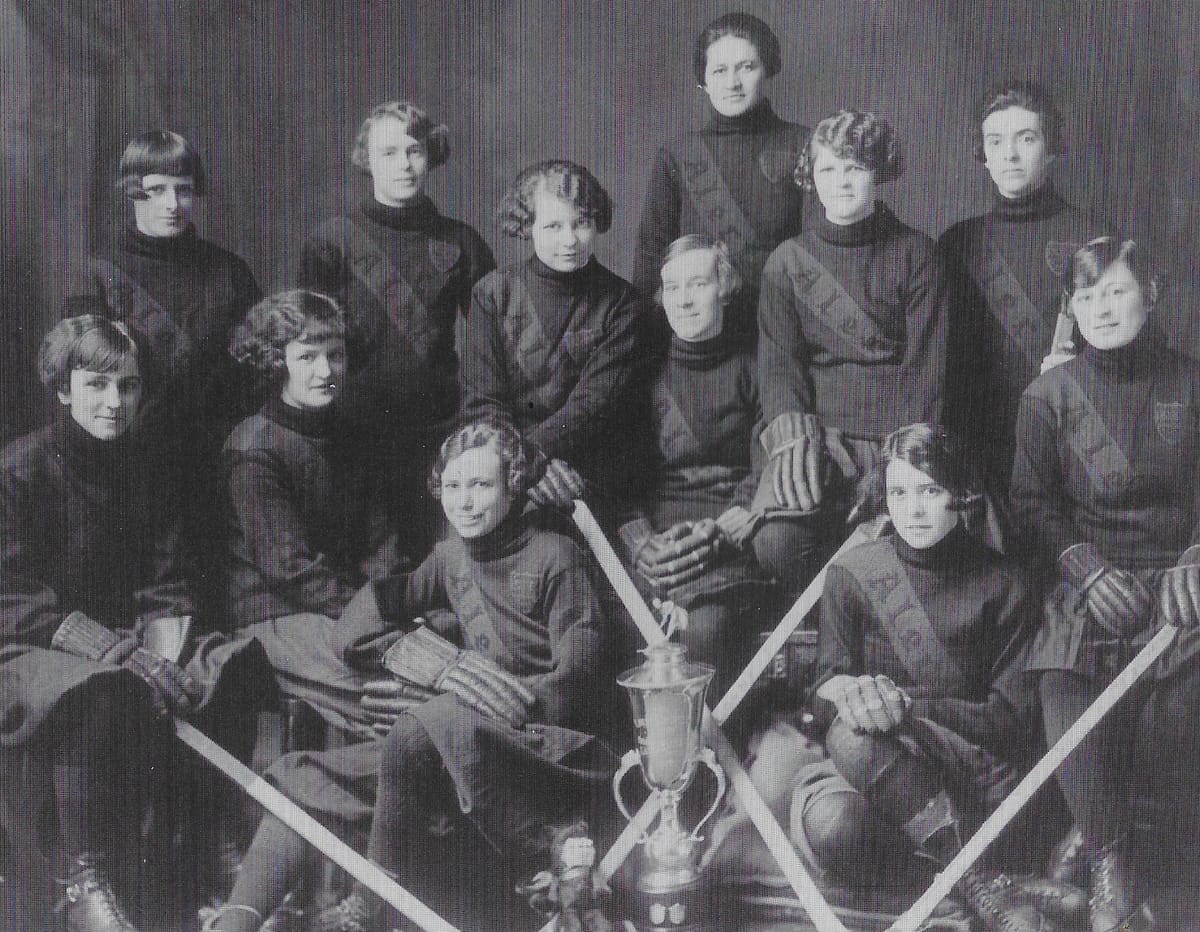
To give the quick hits, the Ottawa Alerts formed in 1915 and played games against the top women’s hockey teams of their day from across Ontario and beyond. They hold claim to the title of first women’s hockey “world champions,” after defeating a team called the Pittsburgh Polar Maids in February 1917 for the first USA-Canada women’s hockey matchup. They won a lot of city and provincial titles throughout the next decade with stars like all-around athlete Shirley Moulds, goaltender Florence Dawson, and team captain Tena Turner, all while wearing skirts. The Ottawa Alerts likely folded sometime in the 1930s as a casualty of the Great Depression, but their legacy lives on in the form of the Alerts Cup, a yearly tournament played between the women’s hockey teams at the University of Ottawa and Carleton University.
Montréal Victoire
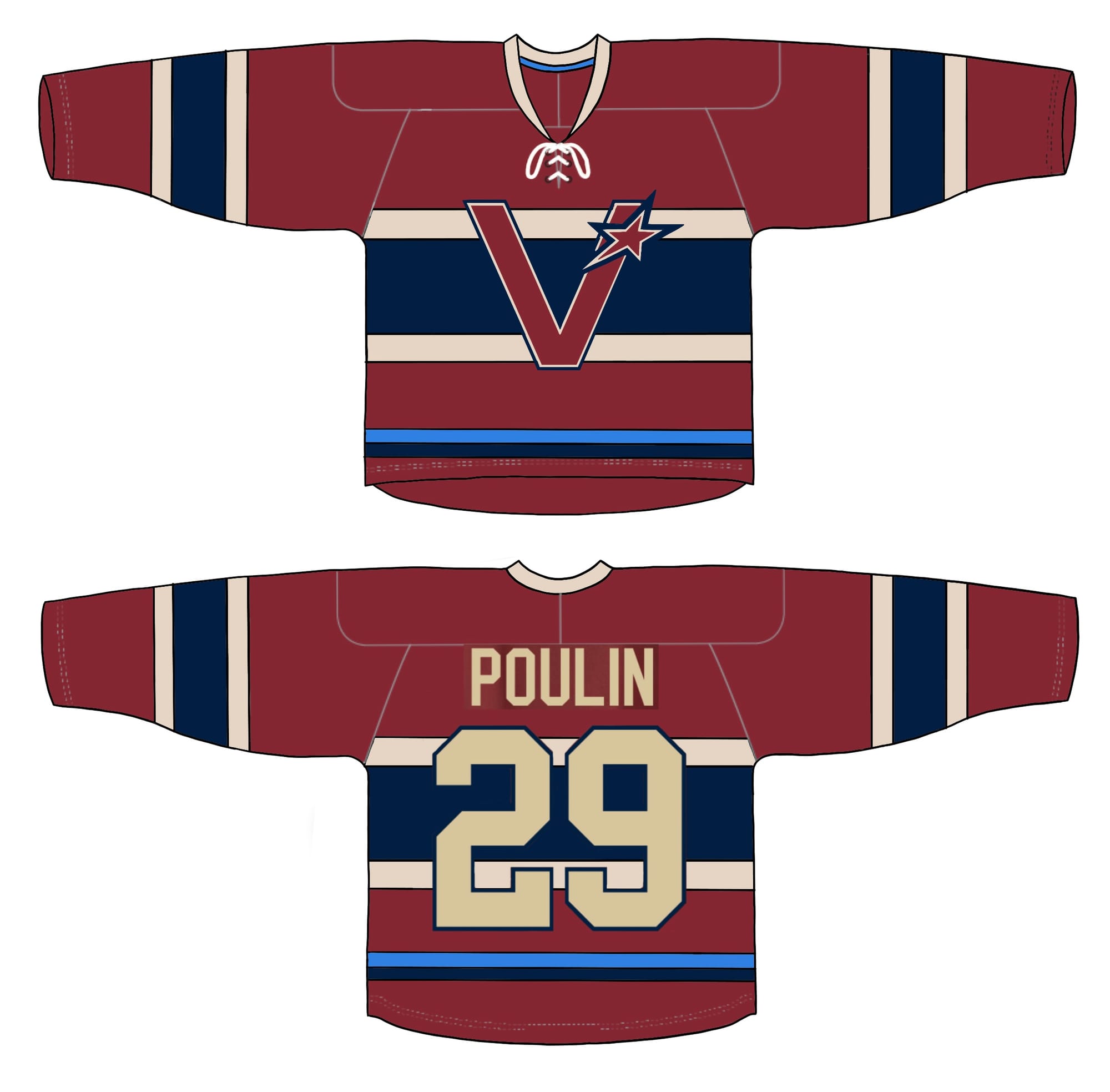
The Design
I’ve been dying to see the Victoire in a chest stripe jersey since the team was announced, so I finally made it happen. The CWHL’s Les Canadiennes de Montréal borrowed the famous bleu, blanc et rouge of their NHL counterparts, completing it with their own stylized C logo, so I borrowed the beloved design for the Victoire. I wanted to keep the original aesthetic intact, so I updated the colors and swapped the C with a V for Victoire, but kept the star in allusion to the CWHL team’s previous name. I’m not reinventing the wheel here and I know it, but doesn’t it just look right to see a Montréal team in a red jersey with a blue chest stripe?
The History
The CWHL’s Montréal team was the league’s most successful. The city was previously home to the Montréal Axion of the NWHL (the Canadian one, not to be confused with the league that later became the PHF), but when the NWHL folded, the CWHL absorbed most of its players and formed a new team, then known as the Montréal Stars. The Stars led the league in the 2007-08 regular season, but ultimately lost the league championship to the Mississauga Chiefs. Montréal did, however, win the very first Clarkson Cup in 2009, defeating the Minnesota Whitecaps to win what was, at the time, an inter-league championship between the CWHL and the WWHL. The Stars would take home the Clarkson Cup three more times: 2011 over Toronto CWHL; 2012, the first intra-league Cup, against the Brampton Thunder; and 2017 over the Calgary Inferno. In 2015, in partnership with the NHL’s Montréal Canadiens, the CWHL team rebranded as Les Canadiennes de Montréal.
Few women’s hockey teams have been as stacked with big names and notable talent as Montréal in the 2010’s. Caroline Ouellette, Julie Chu, Kim St. Pierre, Charline Labonté, Ann-Sophie Bettez, Meghan Agosta, Erin Ambrose, Jillian Saulnier, Genevieve Lacasse, and Emerance Maschmeyer are just some of the players who donned Stars or Les Canadiennes jerseys. Ever wanted to see Hilary Knight and Marie-Philip Poulin on the same team? You could if you were watching the CWHL in 2018 and 2019. Plus, Victoire general manager (and first woman inducted into the Hockey Hall of Fame as a builder) Danièle Sauvageau was a head coach for Les Canadiennes, proving the throughline between the CWHL and PWHL Montréal teams.
Vancouver Goldeneyes
The Design
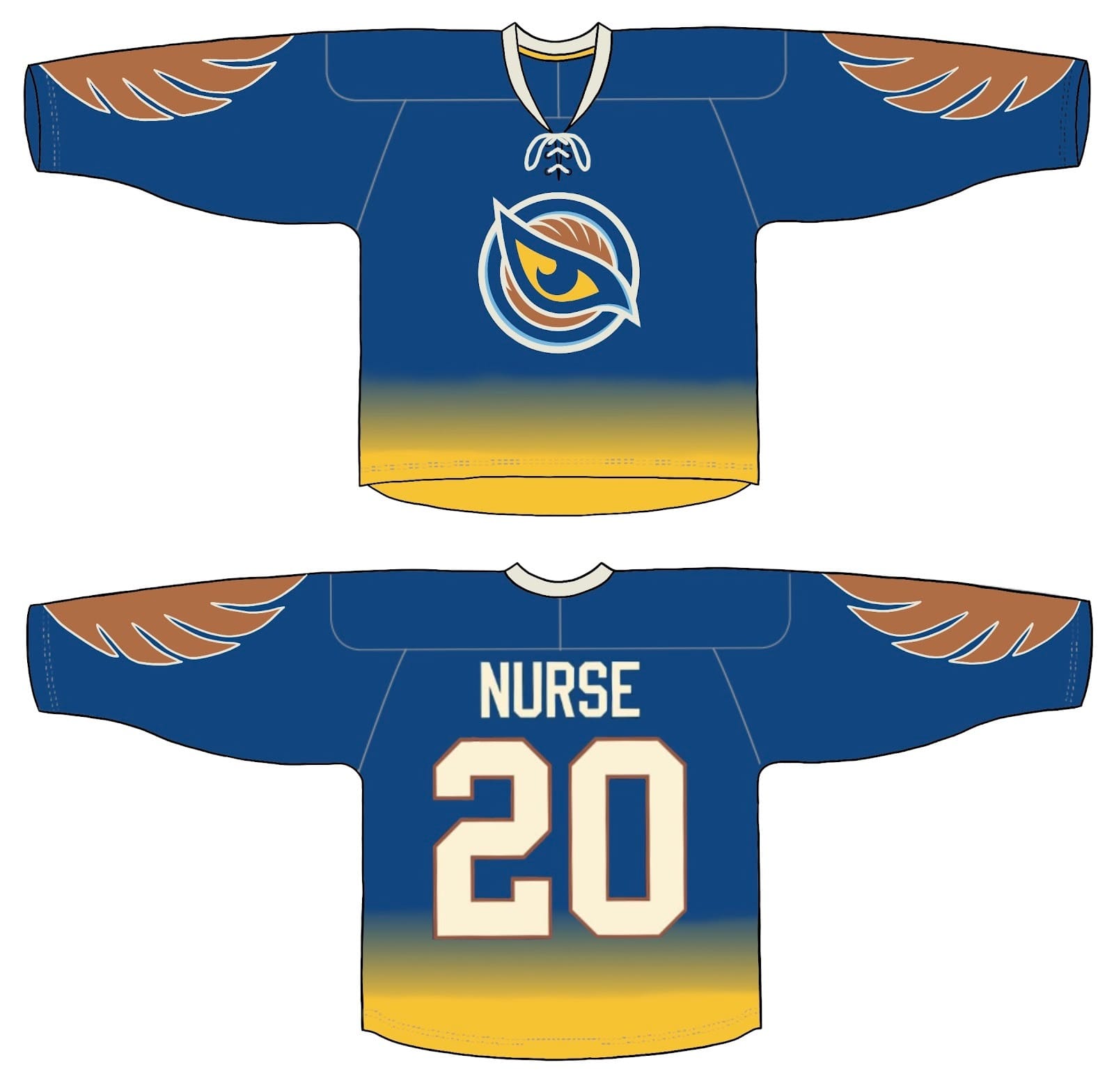
I had to save my favorite for last. This unique, delightfully dated design is a reference to the Vancouver Griffins of the NWHL. With eagle wing sleeve details and a gradient that was both very Vancouver and very 90’s, the Griffins gave me a lot to work with, especially for the also-winged Goldeneyes. It started with the bronze duck wings on the sleeves, using a shape that came right from the Goldeneyes’ logo. Adding the blue-to-yellow gradient at the hem helped keep the style of the Griffins without overcrowding the design too much. And of course I had to finally put the fantastic Goldeneyes logo front and center– specifically the version without the text, because this look does not need it.
The History
The Vancouver Griffins were somewhat of a strange blip in the women’s hockey landscape, but that’s part of why I think honoring them with a jersey is important. The Griffins were founded in January 2000 by Philip DeGrandpre, a local businessman, and played as an exhibition team for their first two years of existence. With a mostly B.C.-born roster (aside from Albertan goalie Kristi Cloutier and Norwegian forward Julia Berg), the Griffins competed against Canadian college teams, provincial teams in B.C. and Alberta, and the NWHL teams from Ontario and Quebec. Vancouver was accepted into the NWHL in the spring of 2000, making it the first Western Canadian expansion team for the league. In 2002, the Griffins were joined in the NWHL by the Calgary Oval X-Treme and the Edmonton Chimos, enough to allow for competitive games amongst the three-team western division. Vancouver came second in the division, but did not qualify for the league playoffs, and the team folded in 2003 after the season ended.
Unlike some of the other teams I’ve referenced, the Vancouver Griffins didn’t have stars up and down the lineup. As an exhibition team first, the Griffins were primarily an opportunity for women in BC to keep playing high-level hockey, even if they weren’t national team contenders or after they graduated from university. However, the roster still included Olympians Nancy Drolet and Shelley Loomey, plus Hockey Hall of Famer Cammi Granato. While the Griffins may have been short-lived, they brought pro women’s hockey to Vancouver for the first time, setting the stage over two decades before the city would be home to a PWHL team.
Next time: local history-inspired jerseys for the American PWHL franchises!


Comments ()