

A Nerdy Look at the Ottawa/Vancouver Trade Part II: Ottawa's Point of View
We're back with the second part of the nerdy, stats-focused breakdown of the Ottawa/Vancouver six-player trade, looking at it from Ottawa's point of view!

Welcome back for Part II of this more nerdy type of breakdown of the Vancouver/Ottawa trade! Go check out Part I to get Vancouver's point of view if you haven't already. Otherwise, read on, and hopefully you enjoy this different breakdown on Ottawa's side of the trade.
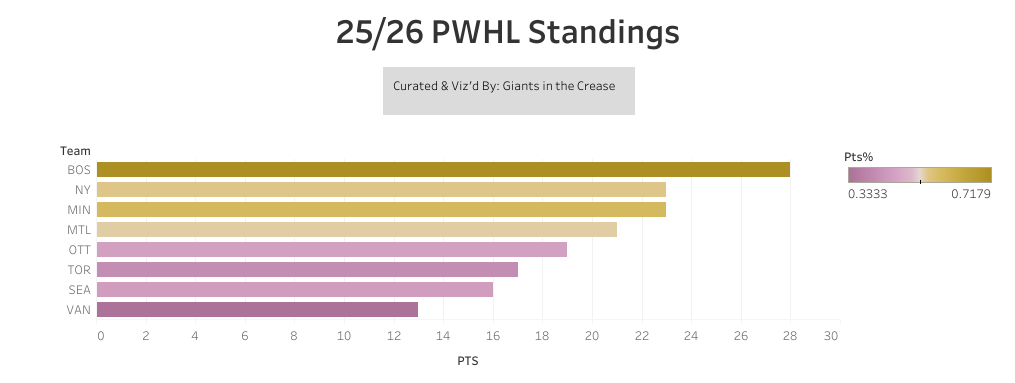
A quick glance at the standings for Ottawa does make it look a tad questionable that they’d be willing to make such a large shake-up trade when they’re currently boasting a 0.571 win percentage. They’re right in the middle of the playoff race and have eight wins in 14 games. That’s a lot of winning, and typically teams don’t like to cause large changes to winning lineups, let alone teams. Ottawa Charge general manager Mike Hirshfeld doesn’t talk to me, so I don’t know the exact reason he made this trade. However, I feel as though he sees what I see and its impending doom if they stay the course.
The vibes are great in Ottawa. They’ve won all five games that have gone into overtime, and look, you’d rather win than lose any day of the week. It’s never a great sign for sustainability, though, when you almost have double the OT wins than you do regulation wins. That’s why, despite having more wins than New York in the same amount of games, Ottawa is four points behind the Sirens. The red flags don’t stop there.
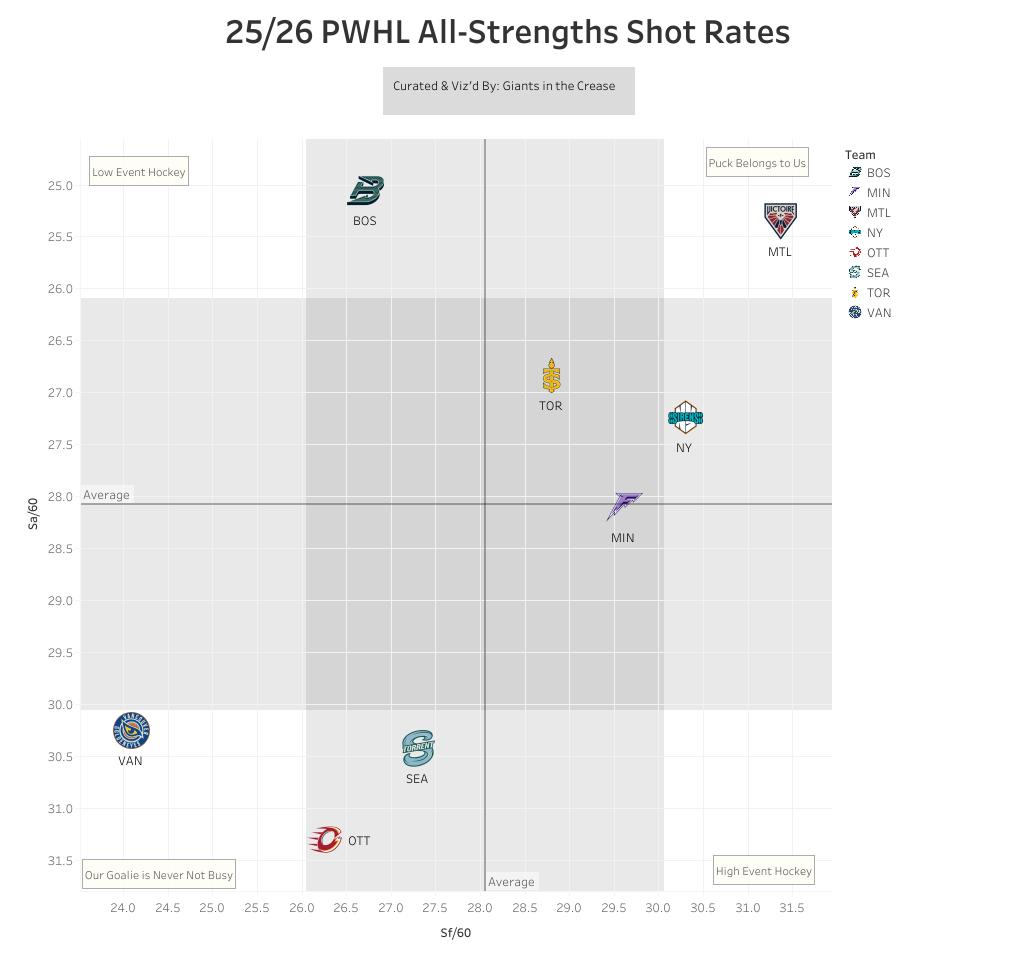
They’re the second-worst team in the league when it comes to shot share at 45.62%, only ahead of Vancouver, who we’ve already pointed out are having a really bad time. Ottawa also has the fifth-highest goal share at 47.83% and even-strength goal share at 46.51%. While their PDO of 1.016 isn’t in the “definitely will regress negatively” category, it’s bumping up against it. They have an 8.8% team shooting percentage, which is second-highest in the league and once again not necessarily unsustainable. But in the current league environment it’s pressing against the ceiling of "negative regression imminent."
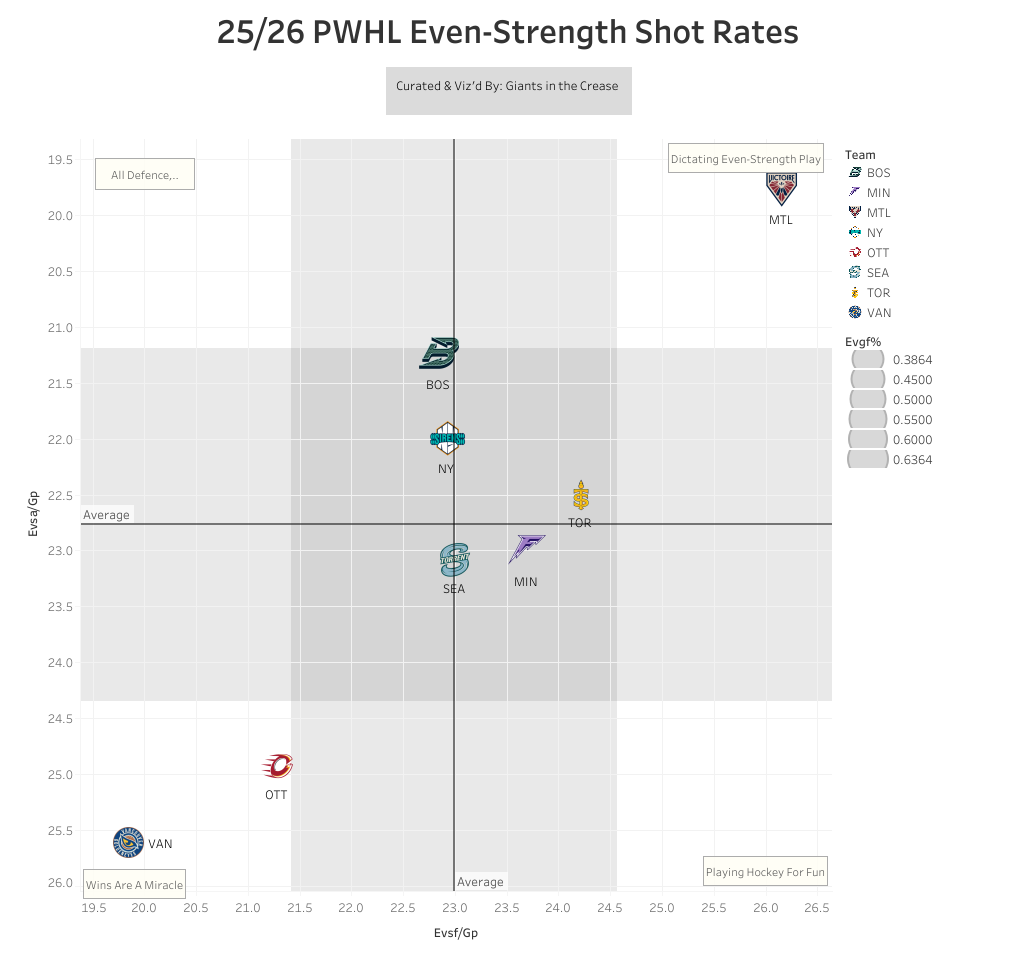
When it comes to even strength, it’s about the same story for Ottawa as it is for Vancouver. Ottawa is getting caved in a bit with a 46.06% even-strength shot share. They’re barely able to generate shots on goal at even strength and are only better than Vancouver at preventing shots on goal at even strength. What’s really helping keeping Ottawa afloat is that they're in the top half of team save percentage, both at all strengths and even strength. Then there’s their power play, which is operating at a league best 21.43% efficiency, and they’re clearly leading the league in power play shooting percentage at 16.1%.
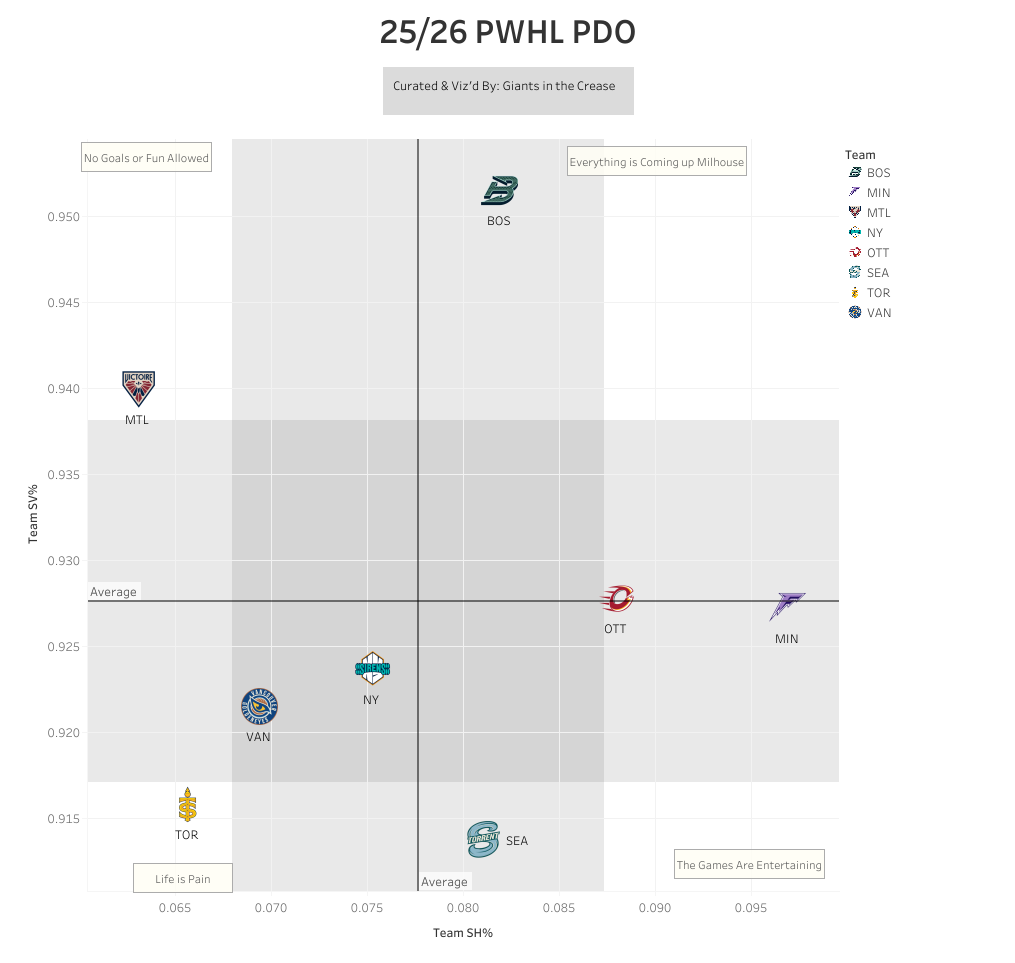
It's very 2024-25 Toronto Sceptres-esque, though Ottawa hasn’t had the same high yet and that was most likely a once-in-a-decade power play hot streak. Ottawa can’t rely on their PP carrying them through the season like this. That’s why Ottawa’s front office has gone with this trade. Their season is currently being held together by witchcraft, duct tape, and carabiners. If they did nothing and continued on, they could make playoffs. This is hockey, after all. Why not try to increase your chances at making the playoffs, though, and avoid having a Sword of Damocles over your head if you can?
The next question is, then, did Ottawa and Vancouver manage to acquire the players necessary to accomplish these goals? The players getting the most attention are the three Ottawa acquired, so we’ll start with them. I know a lot is being made about Emma Greco being added to the deal, because she’s in a relationship with Michela Cava, so don’t split up the couple who signed together originally in Vancouver. While I can believe it came up briefly in front office trade discussions, I don’t think it’s fair to say Greco was added in any large part due to her relationship with Cava.
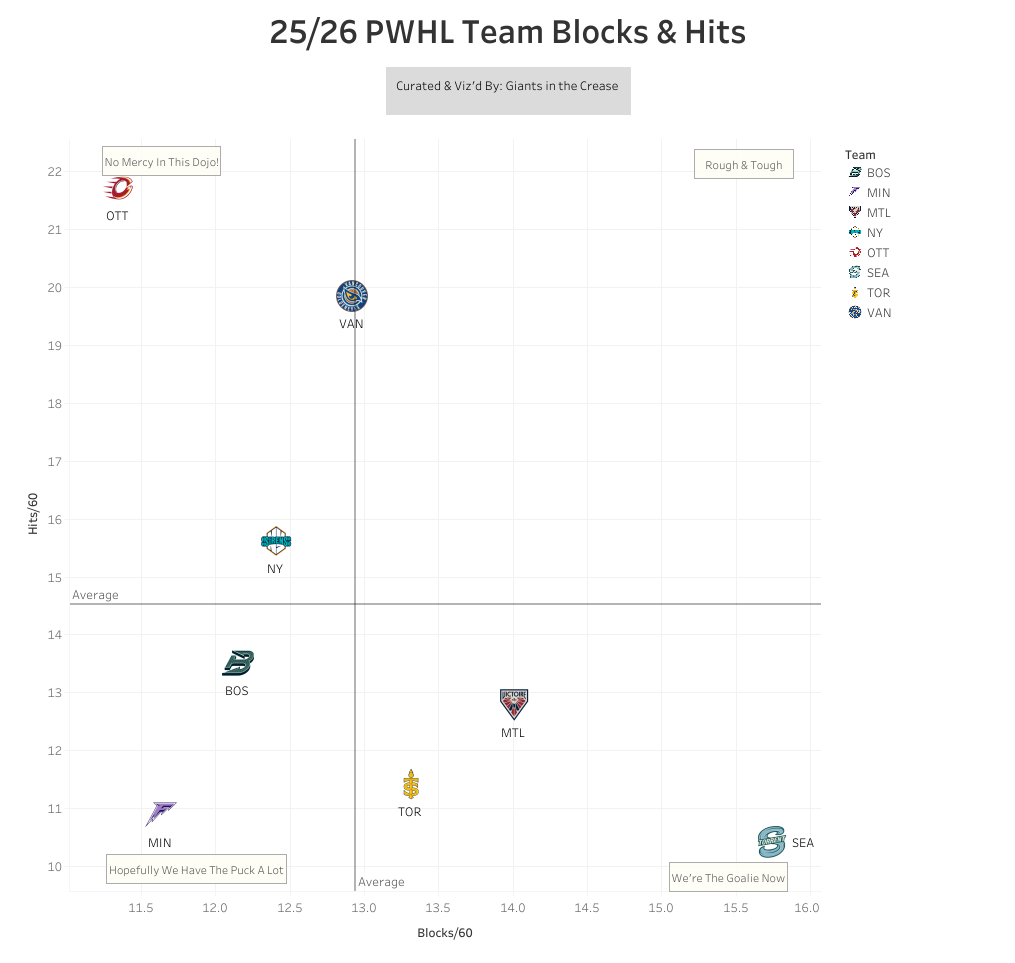
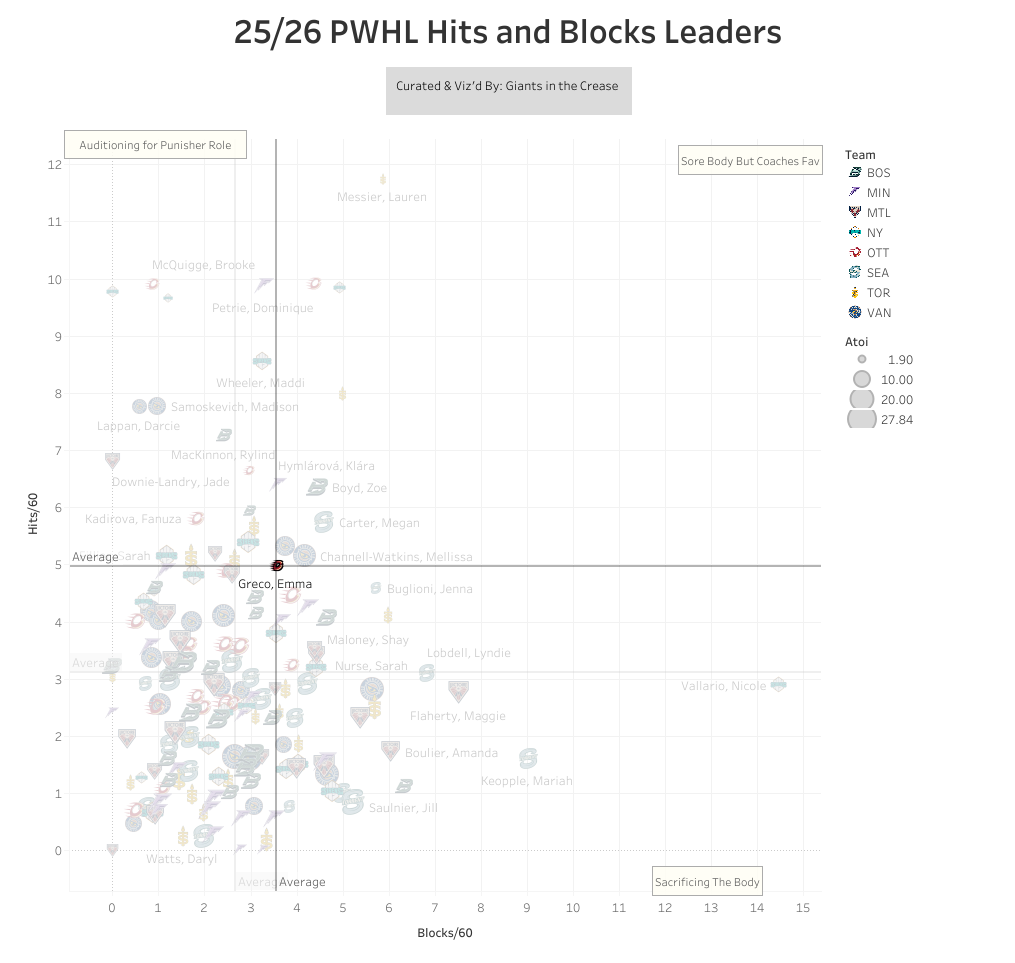
The Ottawa Charge are barely ahead of the Minnesota Frost for last in shot blocks per 60 minutes at 11.345 blocks/60. While blocked shots don’t necessarily make it easier on your goalie, in most cases it does help. In a way, it can correlate to good defensive positioning, of which the Charge, in terms of numbers and eye test, have shown they don’t have it. Adding Greco means adding someone on the back end who can consistently block a few shots a game. Greco’s blocks/60 (3.56) and hits/60 (4.98) rank third on the Ottawa blueline, and she also has experience playing the right side. Ottawa wasn’t going to get Bard or Samoskevich from Vancouver but wanted that prototypical stay-at-home defender, so they got Greco.
Now there’s been a lot of focus on Michela Cava as part of the trade, and for a lot of good reasons. Winning seems to follow her around as she’s currently on a 5-year championship streak (SDHL, Russian Women’s League, PHF, PWHL x2). She’s been rather good in the playoffs, too, winning the Russian Women’s League and PHF playoff MVP awards and having 13 points in 18 PWHL playoff games. Then last season, Cava went off, putting up 19 points in 30 games for 15th in the PWHL in points. To add to those points, Cava also put up nine goals, placing her in a tie for 11th in PWHL. A super-productive year, which raises the question, why is a struggling team like Vancouver moving her to Ottawa?
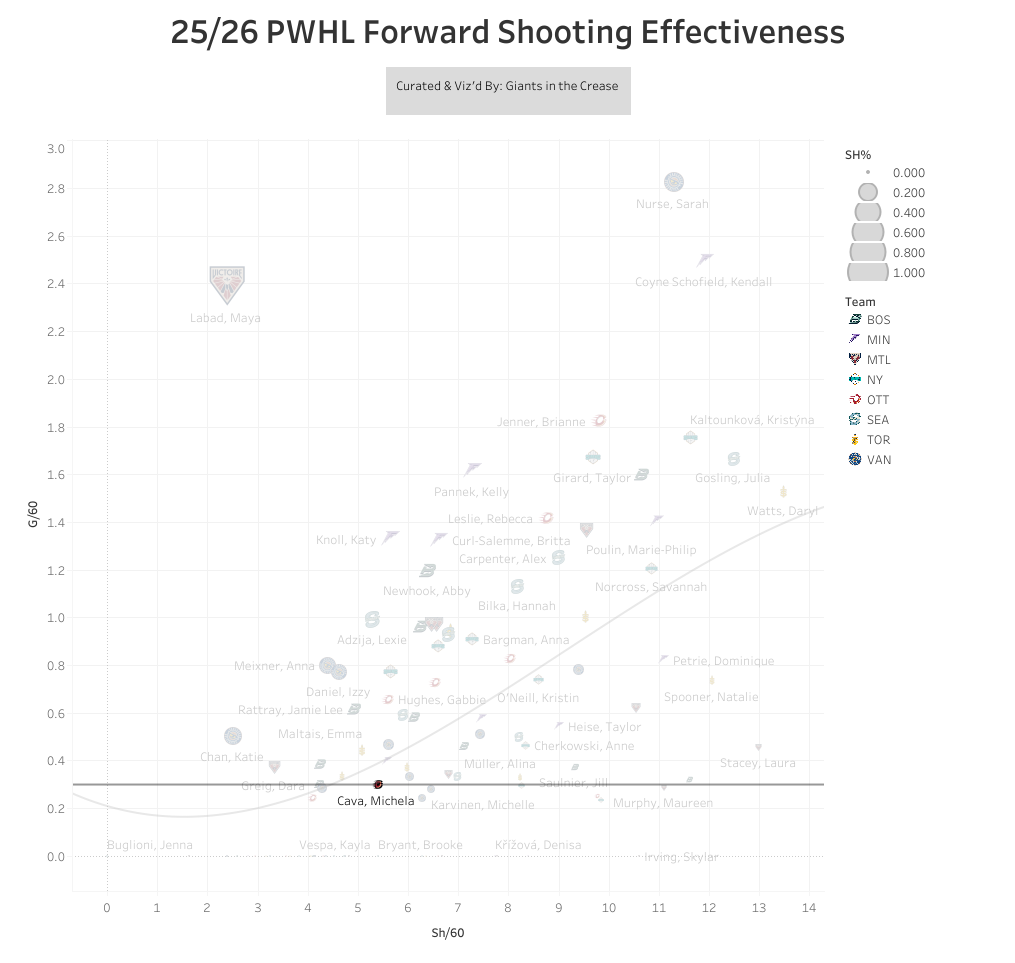
This season is going terribly for her. The idea was she’d be a big part of the Vancouver offence, and while five points does put you in a four-way tie for most points by a Vancouver forward, being on pace for 10 points and two goals in 30 games is abysmal. You can’t win games when your best forward has 10 points and two goals on the season. That can’t even be what your third-best forward does. Is Cava the victim of a low shooting percentage? To a degree, yes, as she’s shooting only 5.6%, but even if that were to normalize, she’d have just an extra goal. The problem here is that Cava is not a shot producer; even last season, she only had 6.48 SOG/60, which has dropped to 5.39 SOG/60 this season.
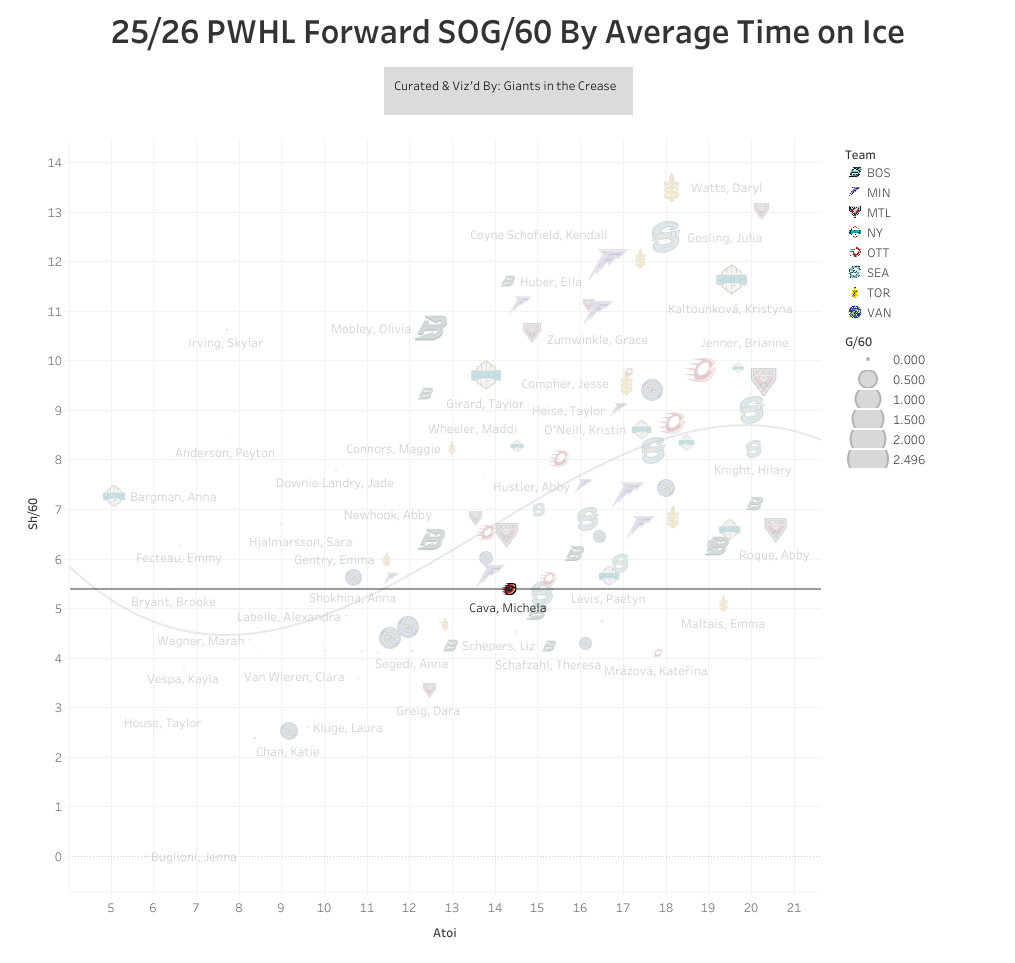
Cava isn’t helped by the fact that her usual linemates—Anna Segedi and Tereza Vanišová—haven’t been big shot producers themselves, with both being under 5.0 SOG/60. You expect that from Segedi, especially with two established PWHLer shooters on her line, but Vanišová is very surprising, as she was second in the PWHL in SOG/60 last season. They either just have poor chemistry, or coaches don’t know what to do with this line to get it going. Regardless, Cava wasn’t working in Vancouver, and in her last game she only played 1:15.
All of this is to ask: is Cava going to help the Ottawa Charge? Cava is still a skilled player, and her resume shows that. She’s been a pretty productive player in the PWHL as well. There’s a reason Vancouver wanted her. Cava puts up points and she does it at even strength. She’s great at playing with elite players, as we can see from when she was put with Taylor Heise and Kendall Coyne Schofield last season. As we see this season, though, Heise and Coyne Schofield are continuing their dominance, whereas Cava's run into a wall offensively with Vancouver.
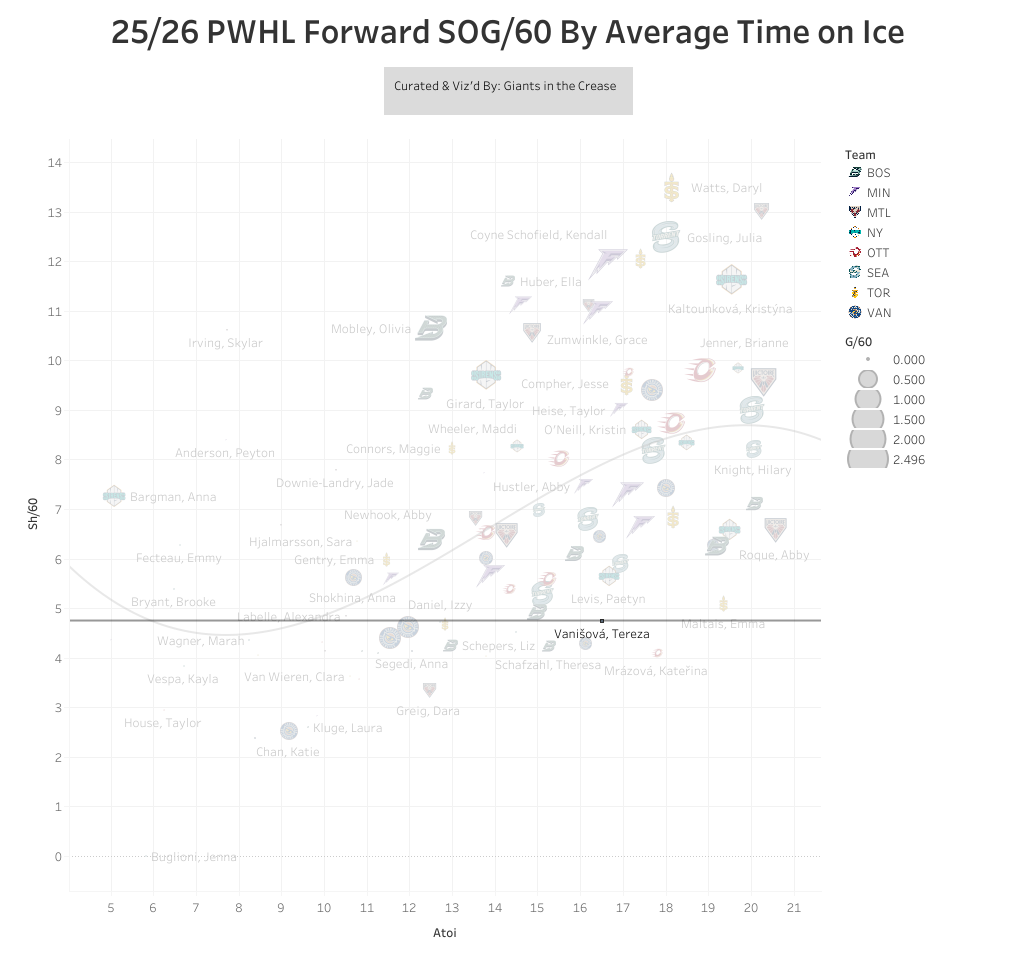
This doesn’t mean Cava is a bad player or she can’t do anything without elite players around her. I believe it to show, though, that Cava isn’t going to be the line driver. What she’s very good at doing is helping elevate her linemates half a step more than their usual play so with elite players the effect is greater. That’s where it went wrong in Vancouver is she didn’t have that elite play driver to play off of, and as good as Vanišová is, she drives play for one player and one player alone: herself.
What should be the expectations now that Cava is in Ottawa? I think reaching last seasons numbers were never going to be repeated unless she ended up back on the top line in Minnesota. The reason Vancouver is moving on from her is the reason Ottawa shouldn’t expect a lot from Cava: she can’t be the best player on her line, and if she’s the second-best player on her line, the best player needs to be elite. The reason Ottawa is making this trade is they need more offence. Cava just being the skilled player she is will help out Ottawa, but expecting her to reach her Minnesota levels is asking a lot. Ottawa does not have the forward talent Minnesota has, which is why they’re making this trade, and they’re not a Cava away from matching Minnesota.
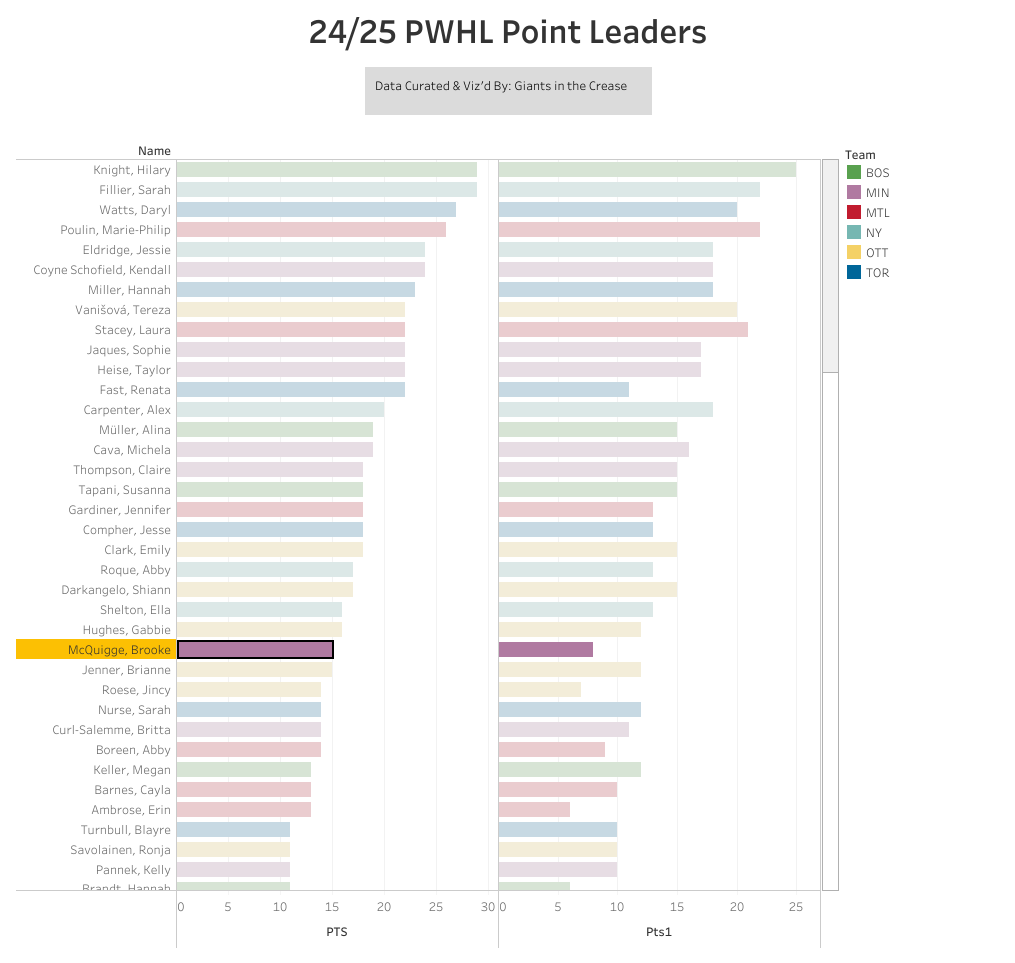
The final player on the Ottawa side to cover is Brooke McQuigge, and out of the three players going to Ottawa, I think she’s the most interesting. Once again, you have a forward who saw massive success on the Minnesota Frost in the 2024-25 season, finishing above half a point per game and with eight goals, placing her 16th in the PWHL for goals. I’ve pointed out plenty online that McQuigge also shot at a 20% clip, which led the PWHL in shooting percentage last season. That’s not sustainable and it expectedly dropped this season.
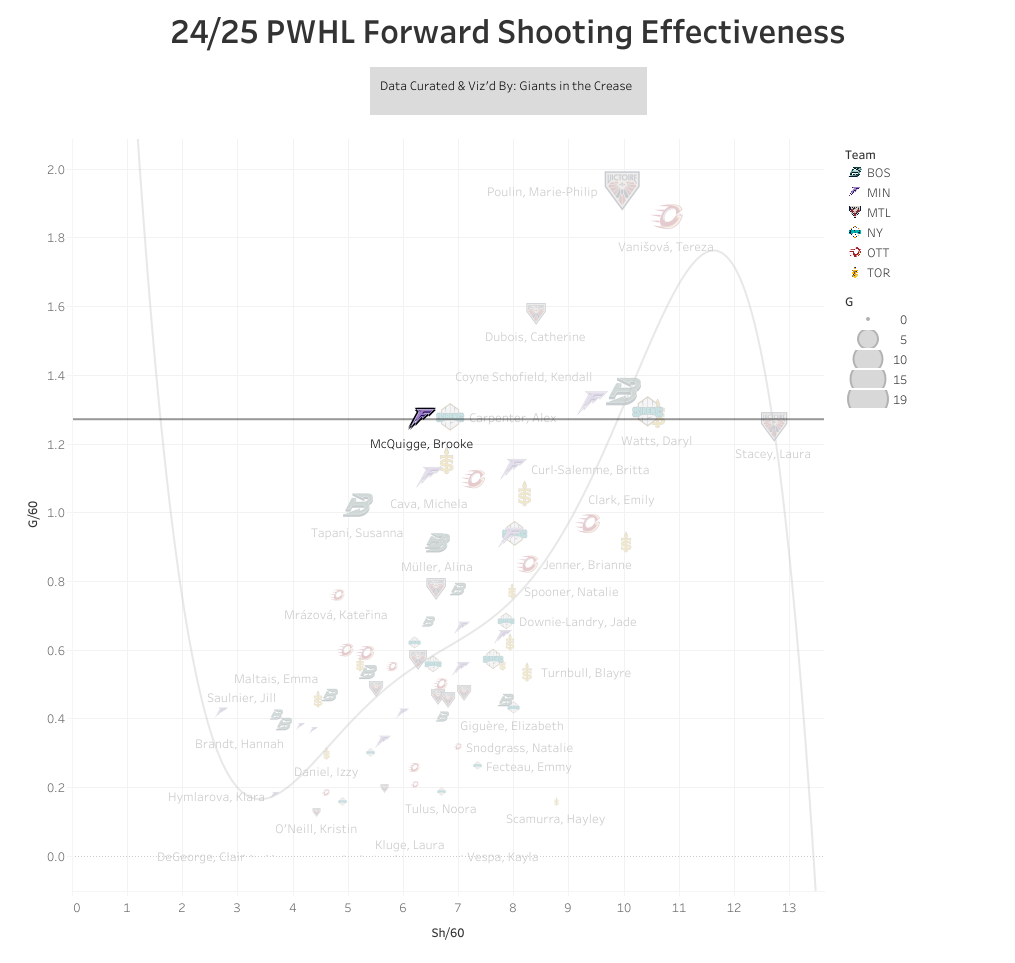
What was not expected was her shooting percentage dropping to 0%. A large part of that is due to her role in Vancouver, which was being a fourth line winger who sometimes saw some games on the third line. That's a significant downgrade from being in the Minnesota Frost top six. She’s seeing about four minutes per game fewer in the move to Vancouver. Can McQuigge play in a bottom six role? She definitely has the attitude for it, and anyone who saw her regularly in the NCAA's ECAC will attest to that.
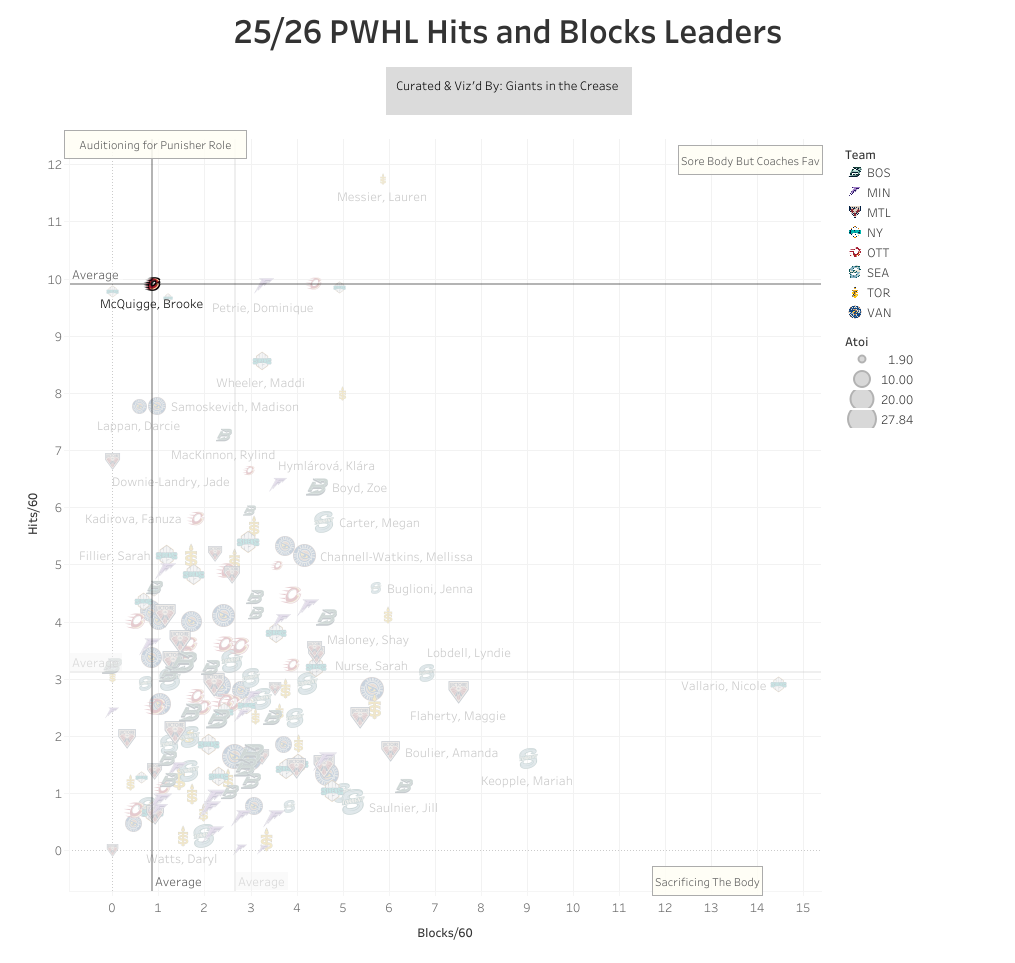
She’s also a skilled player with a nose for the net, which is why she did score eight goals even with the very high shooting percentage. With Vancouver, McQuigge was on pace for about 20 shots on goal, which is half the shot on goal production she had with Minnesota. I believe it to be clear that the Vancouver coaching staff didn’t view her as someone who can contribute in a higher role, despite her doing so last season. And while McQuigge can be mean enough to play a bottom six role, it’s a waste of her abilities to have her in a mostly fourth line role. Especially when, while the rest of the Vancouver forwards were failing, there was no attempt to add some energy via McQuigge.
With Cava we pointed out that some of Vancouver’s overall failure does fall on her. She was signed as a big piece with a very good resume, and now she’s been traded into nearly the exact same situation she just left, only better vibes in Ottawa. With McQuigge, what makes her so intriguing is Vancouver wasn’t deploying her to her strengths.
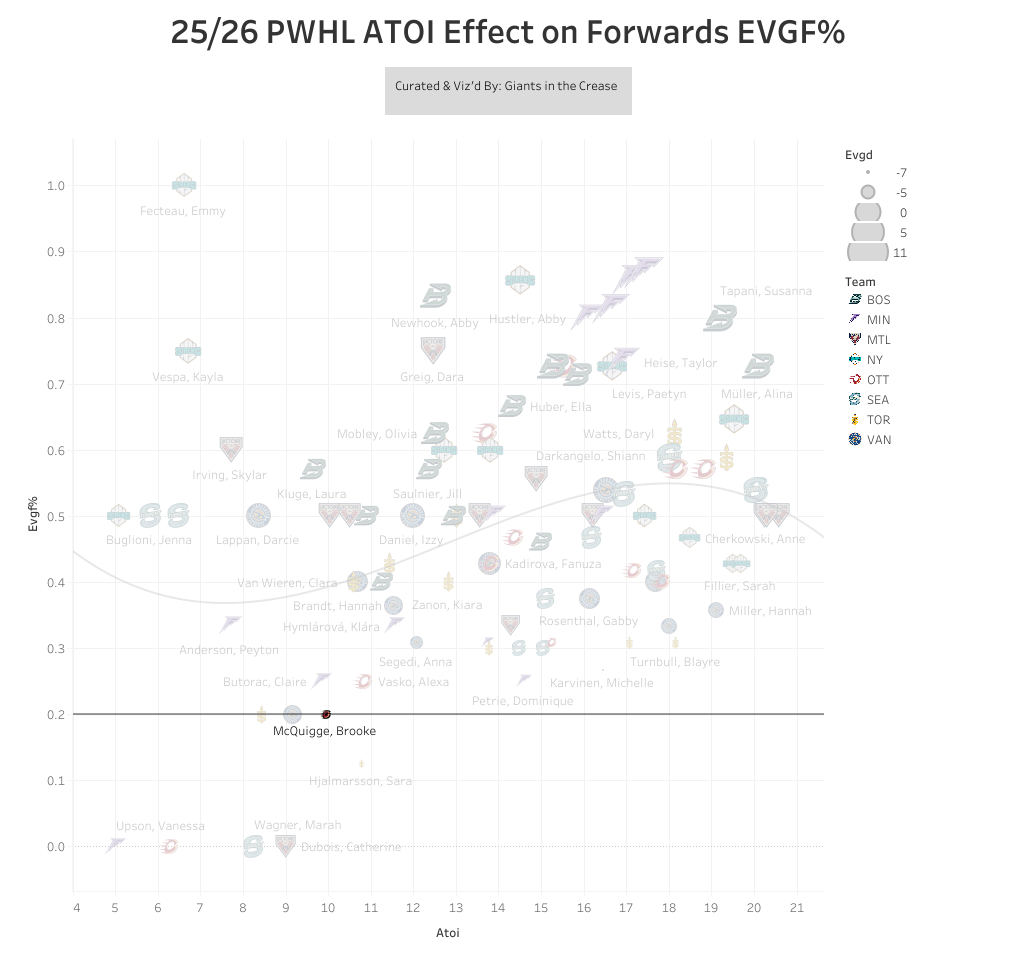
Expansion is supposed to come with opportunity for players lower in the line-up. McQuigge was not given more opportunity in Vancouver, and maybe she didn’t earn it in the eyes of the coaching staff. It's hard to believe that since the coaching staff who won two Cups was able to make the most of McQuigge, but every coach has their own standards. Going to Ottawa, a team desperate for forwards with skill and some meanness in their game, will give McQuigge the opportunity to show that her rookie season wasn’t a complete fluke. Carla MacLeod is going to love McQuigge, and out of the three players in this trade to Ottawa, McQuigge has all the signs of someone who is going to show exponential improvement compared to her Vancouver stint.



Comments ()