

2026 Olympic Quarterfinal Preview: Canada vs. Germany
Canada enters the quarterfinal as the deeper team, while Germany’s path hinges on structure and goaltending.
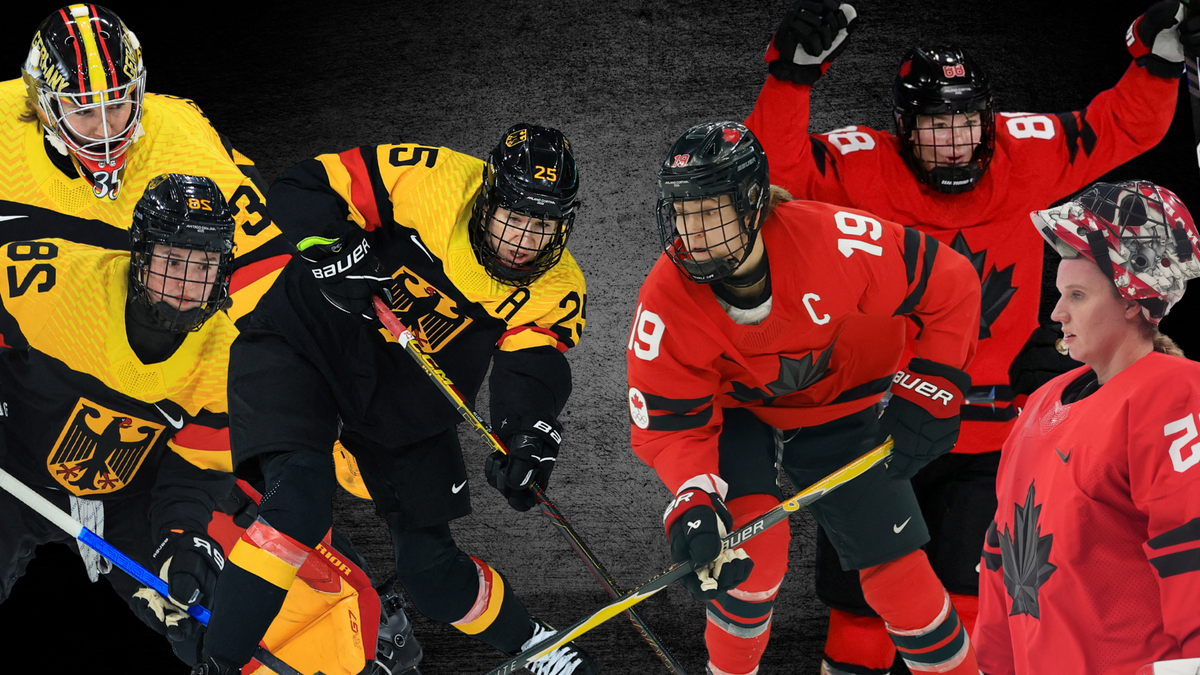
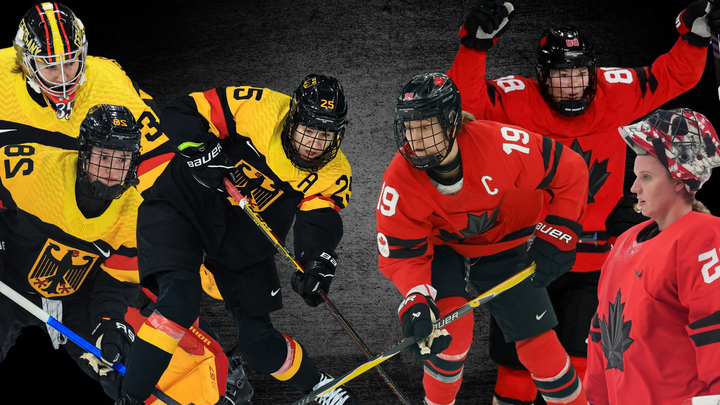
After the preliminary round wrapped up in Milan, the women’s hockey quarterfinals are set, and Canada will face Germany with a place in the medal round on the line. On paper, this is a very favourable matchup for the defending Olympic champions, but Germany has already shown it can make games uncomfortable.
How They Got Here
Canada
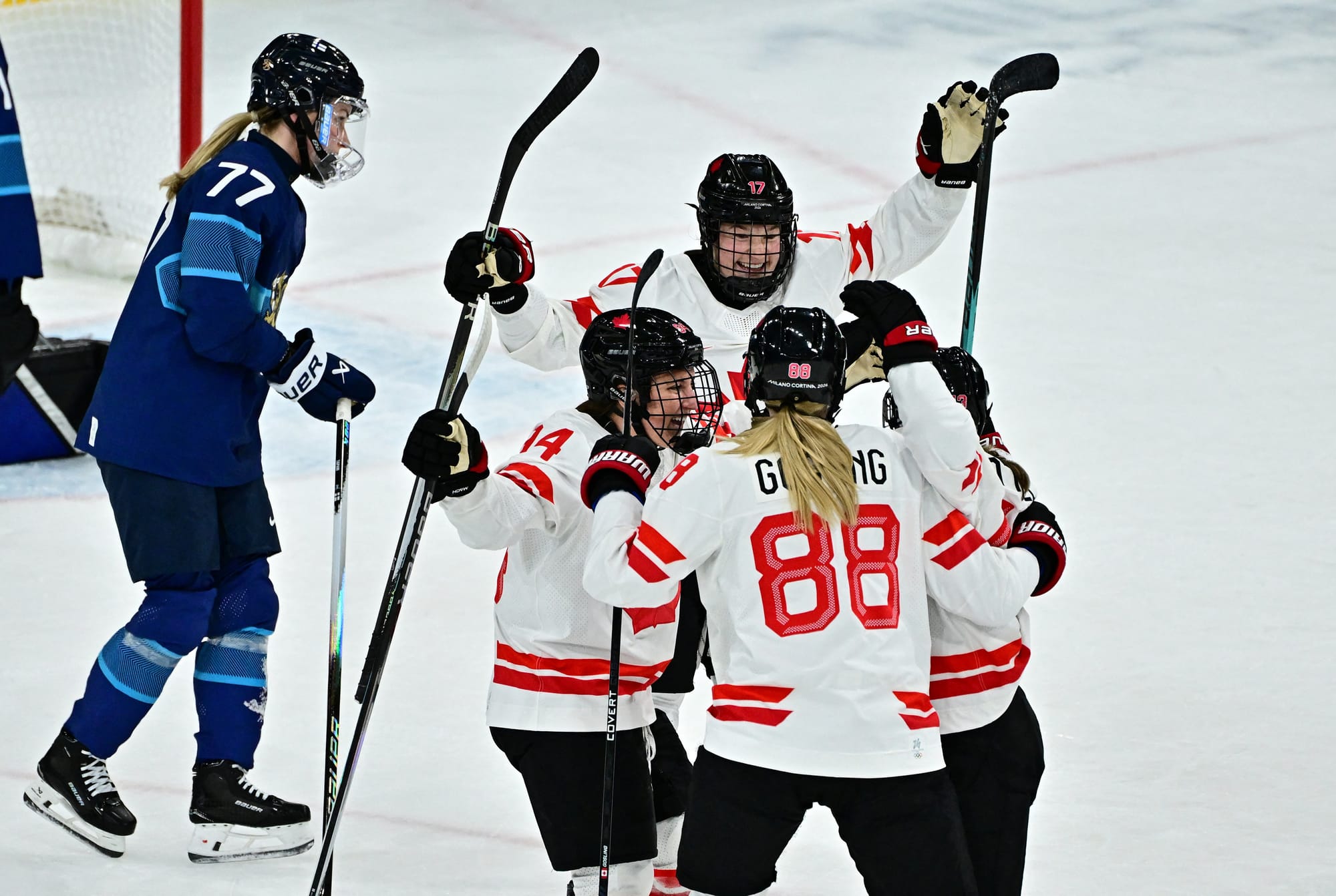
Canada closed out preliminary play with a 5–0 win over Finland, the defending Olympic bronze medalists, a result that reset the tone after a lopsided loss to the United States. The shutout showed Canada at its best: structured defensively, patient offensively, and in control for most of the game.
Offence has been spread throughout the lineup. Julia Gosling leads Canada with five points (3G, 2A) in four games, followed by Sarah Fillier and Daryl Watts with four points apiece. The blue line has also contributed consistently, with Claire Thompson recording three assists through four games.
In goal, Canada has been solid. Emerance Maschmeyer was perfect in her start, while Ann-Renée Desbiens has handled the bulk of the minutes (3 GP, 2.09 GAA, .905 SV%). Canada has controlled play in most of its minutes and hasn’t had to chase games often, an important factor heading into elimination hockey.
Germany
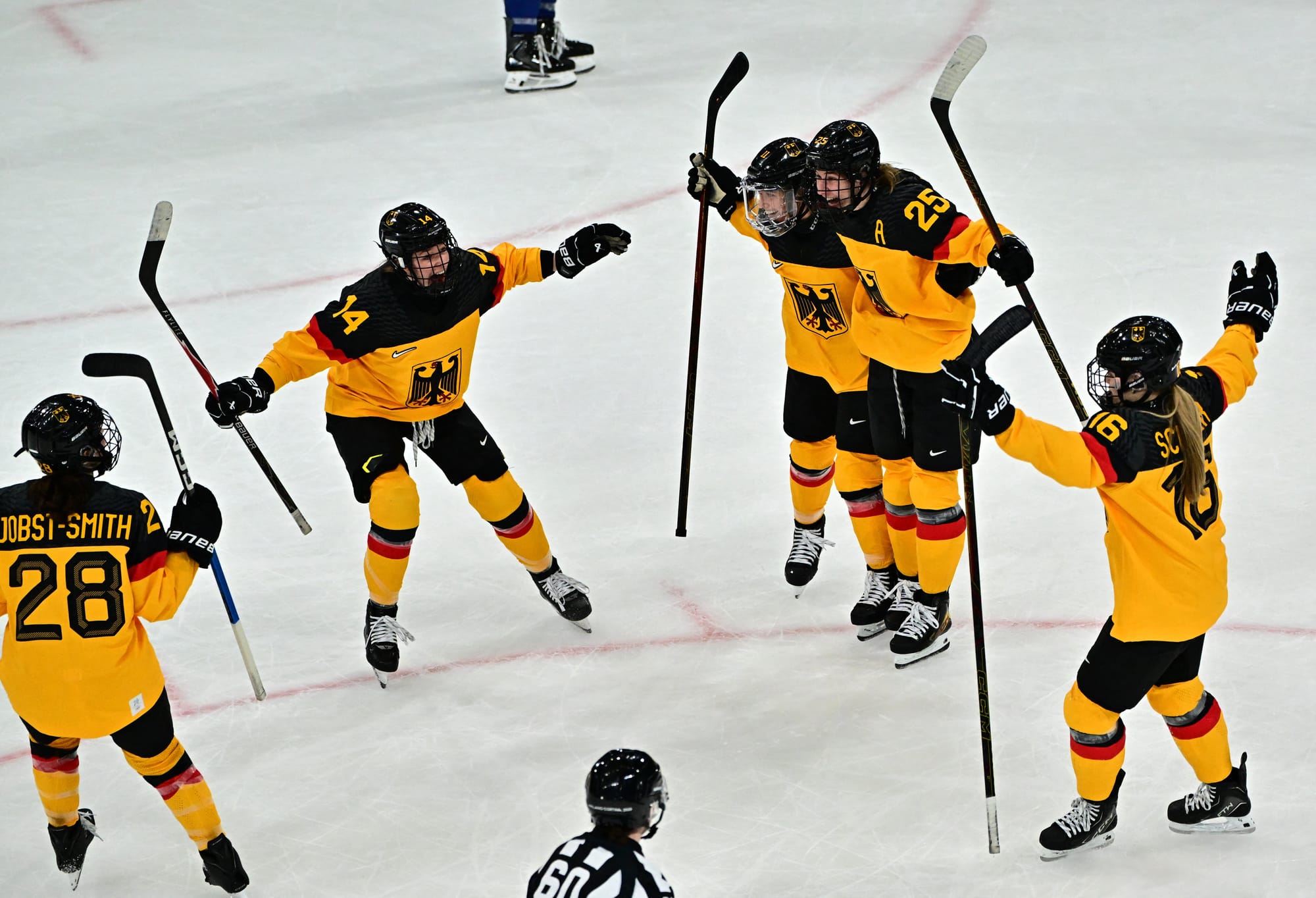
Germany’s presence in the quarterfinals is notable on its own. These are Germany’s first Olympic Games since 2014, after failing to qualify in both 2018 and 2022. This tournament represents a return to the sport’s biggest stage rather than a fully finished product.
Their path here has relied heavily on structure and goaltending. Offensively, Laura Kluge has carried the load, leading Germany, and the tournament, with seven points (3G, 4A) in four games.
In net, Sandra Abstreiter has been the difference. Through four games, she owns a 1.99 GAA and .918 save percentage, giving Germany a chance to stay competitive even when they’re being outshot. If Germany somehow advances, it will be because Abstreiter forces opponents to beat her more times than they’d like.
Storylines
Marie-Philip Poulin
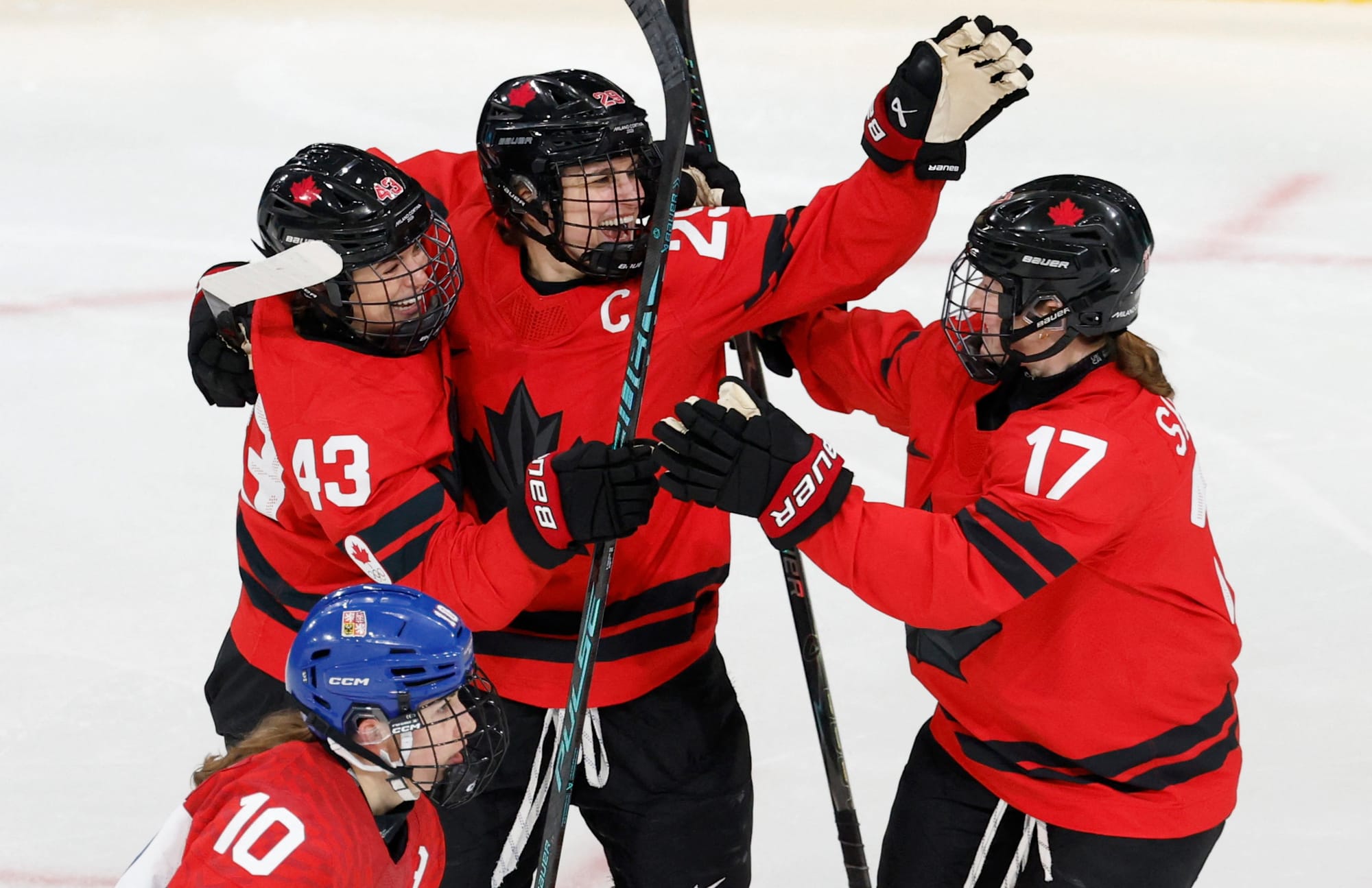
The biggest question heading into the quarterfinal is availability. Marie-Philip Poulin has been out since leaving in the first period of Canada’s game against Czechia and is listed as day-to-day. She skated at practice on Friday, but she is still unlikely to play and will be a game time decision.
Marie-Philip Poulin didn’t look like she was limited at all during practice, taking part in all the drills.
— Claire Hanna (@clahanna) February 13, 2026
She’ll be a game time decision against Germany in the QF:
“One day at a time, happy to be where I’m at today. Skated yesterday, skated today, obviously it’s very… pic.twitter.com/lhCR3U6Nod
Her status matters, but it shouldn’t define this matchup. Canada has already shown it can control games without her, including that 5–0 win over Finland.
If Poulin plays, Canada gains matchup flexibility and experience. If she doesn’t, this is still a game Canada should be able to easily win.
A Montréal crease, split in two
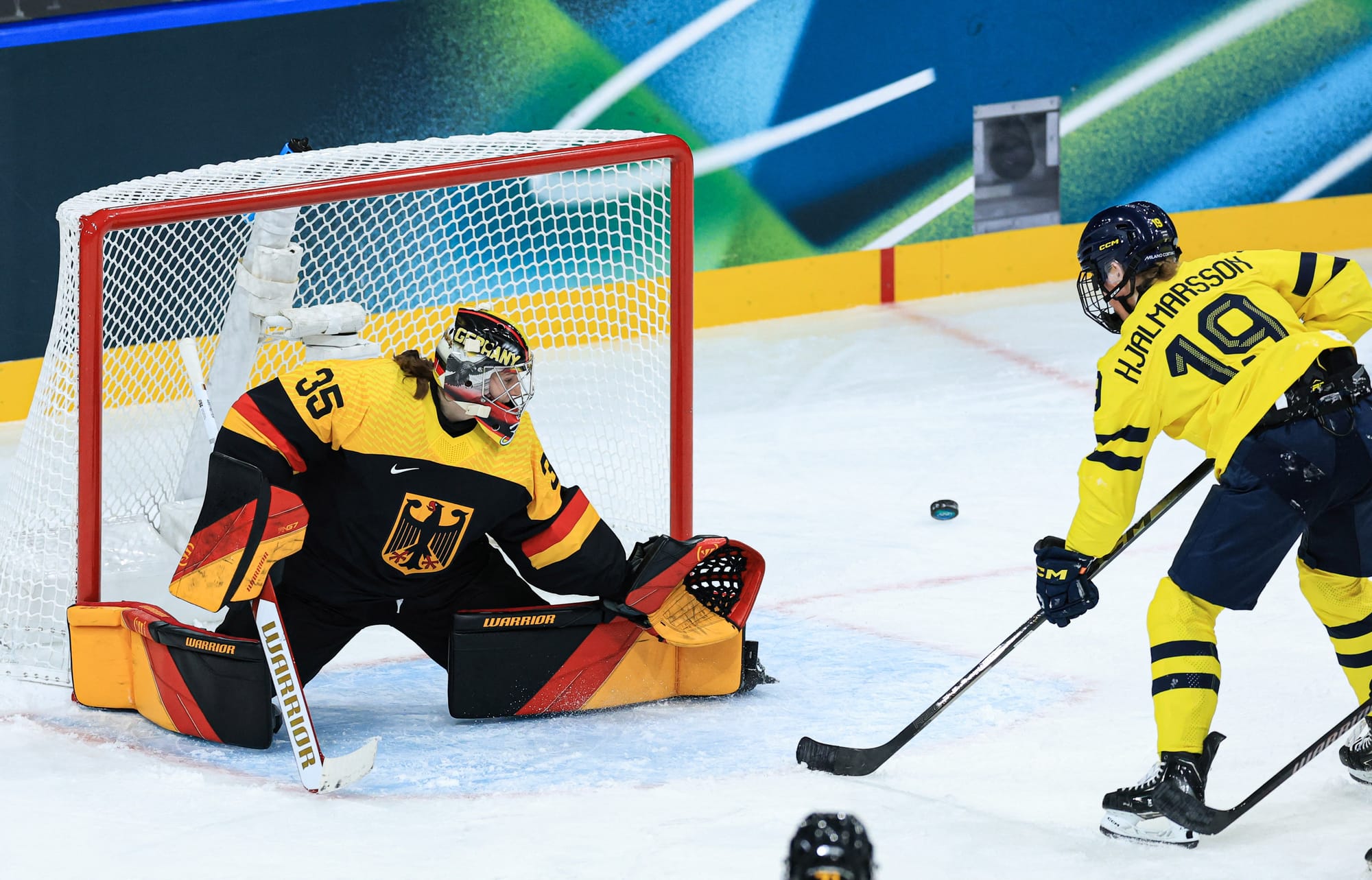
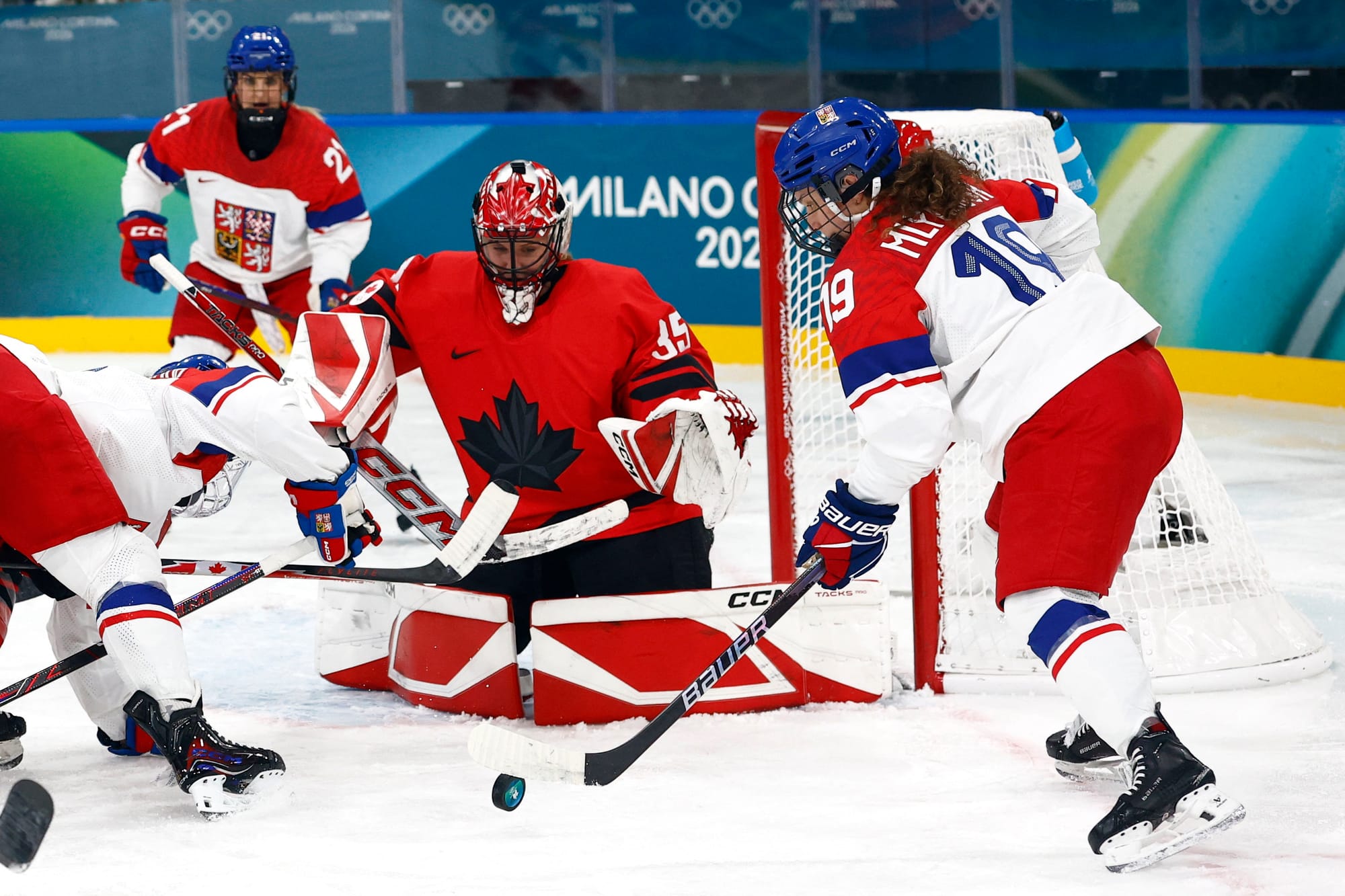
Sandra Abstireter and Ann-Renée Desbiens. (Photo Credit: Katie Stratman-Imagn Images and Alessandro Garofalo/Reuters via Imagn Images)
Both goaltenders know each other well from their time with the Montréal Victoire, where they’ve shared the crease this season That familiarity doesn’t change the stakes of an Olympic quarterfinal, but it does remove any mystery around tendencies, habits, or preparation. Each knows what the other looks like on a good night, and what it takes to beat them.
Abstreiter enters the quarterfinal starting all four preliminary games, and Germany’s ability to stay competitive has hinged almost entirely on her performance. She’s already shown she can handle high shot volumes and keep games low-event, which is exactly what Germany needs against a deeper Canadian roster.
On the Canadian side, Desbiens is not confirmed to start, but she’s been Canada’s primary option through the preliminary round and is the likely option.
Prediction
Canada should easily win this game.
Germany has been organized and composed, and returning to the Olympics for the first time since 2014 is an accomplishment in itself. Kluge can create moments, and Abstreiter can steal stretches of play, but Canada has more depth, more pace, and more ways to take the lead over 60 minutes.
Comments ()